Skip to product information
1 of 18

MaksArtGallery

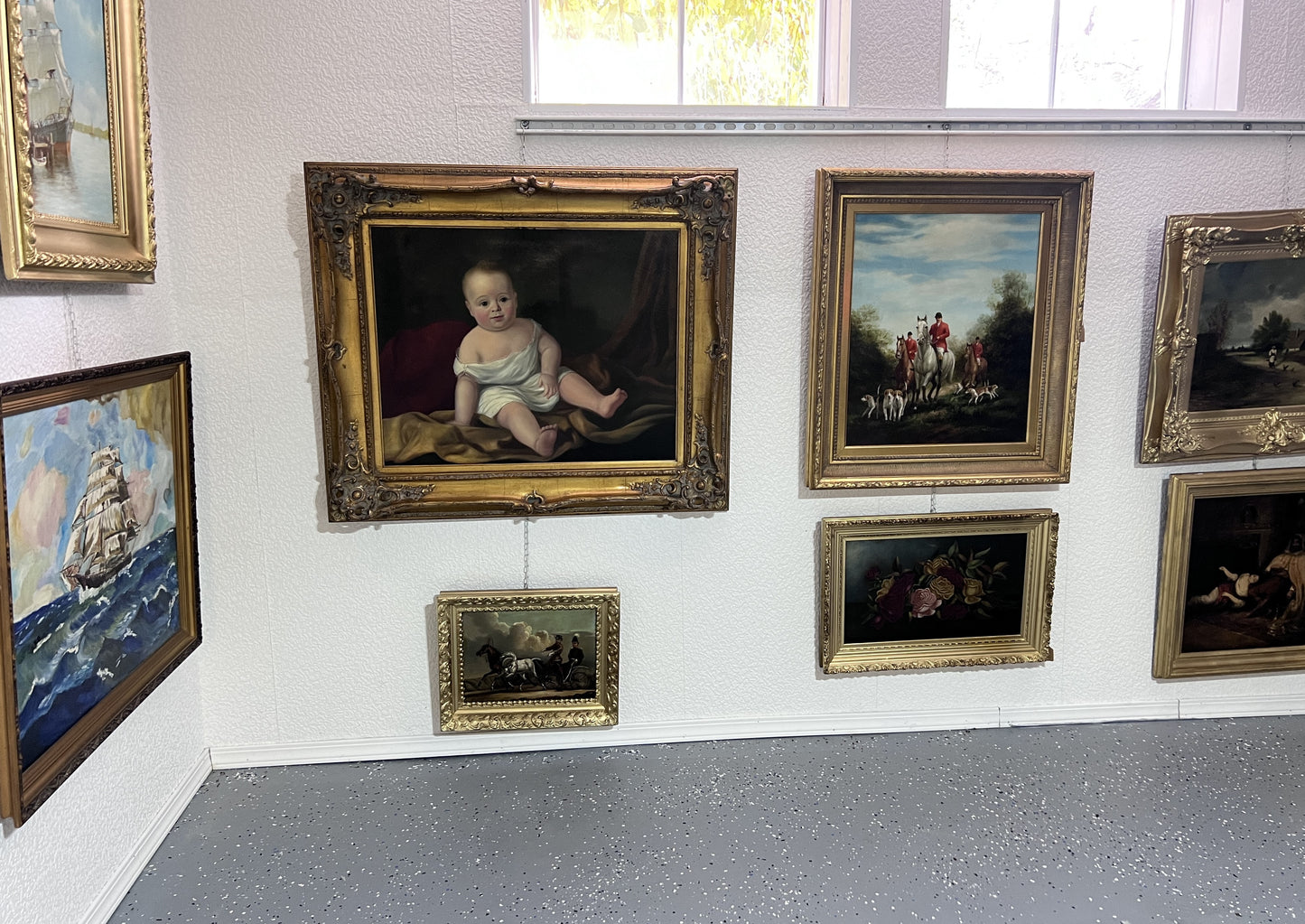
Attr. to John O’Brien Inman (1828–1896) — Antique 1864 American Child Portrait

Attr. to John O’Brien Inman (1828–1896) — Antique 1864 American Child Portrait

Regular price $6,500.00 USD
Regular price $12,000.00 USD Sale price $6,500.00 USD
Sale Sold out
Shipping calculated at checkout.

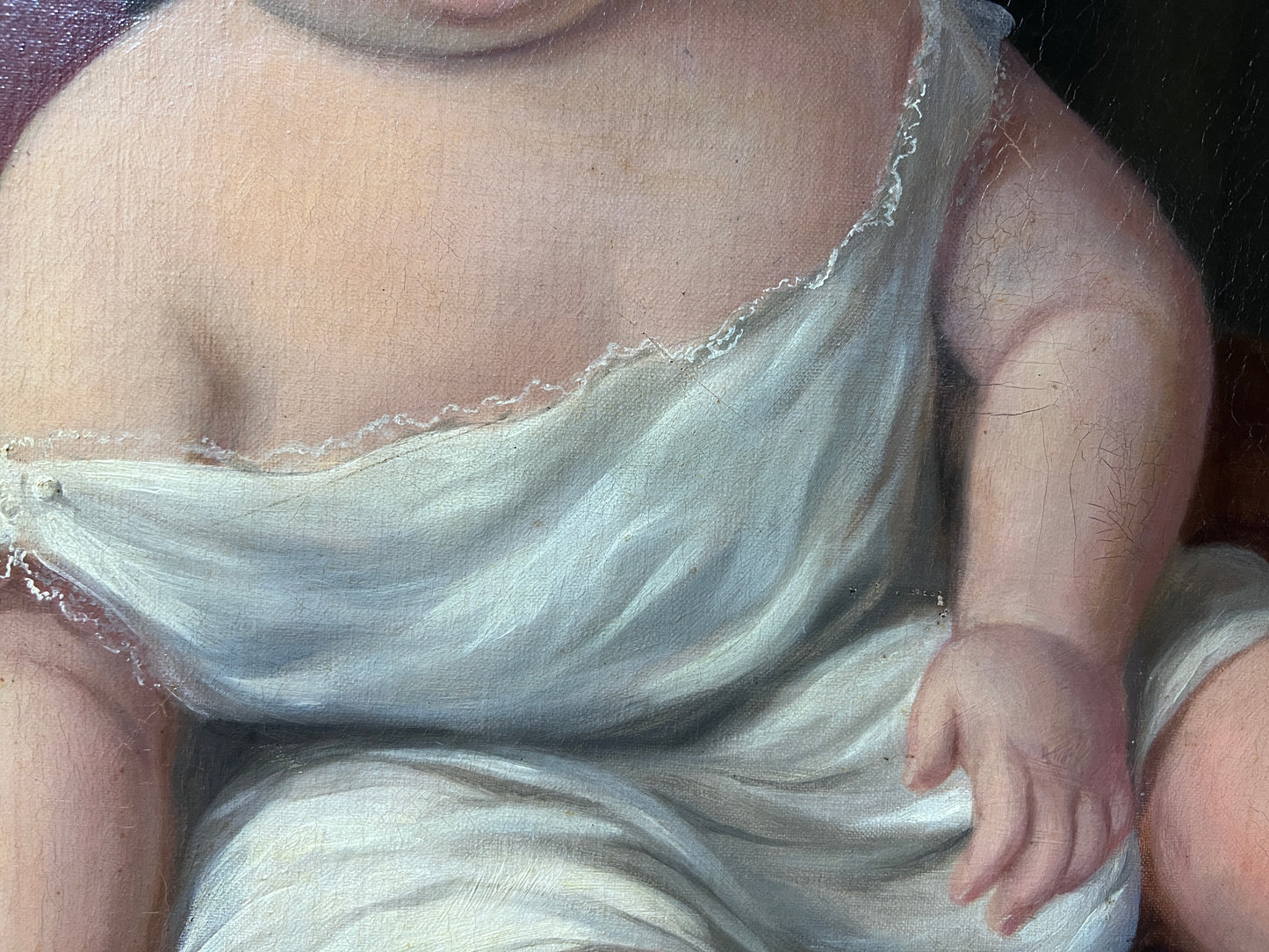
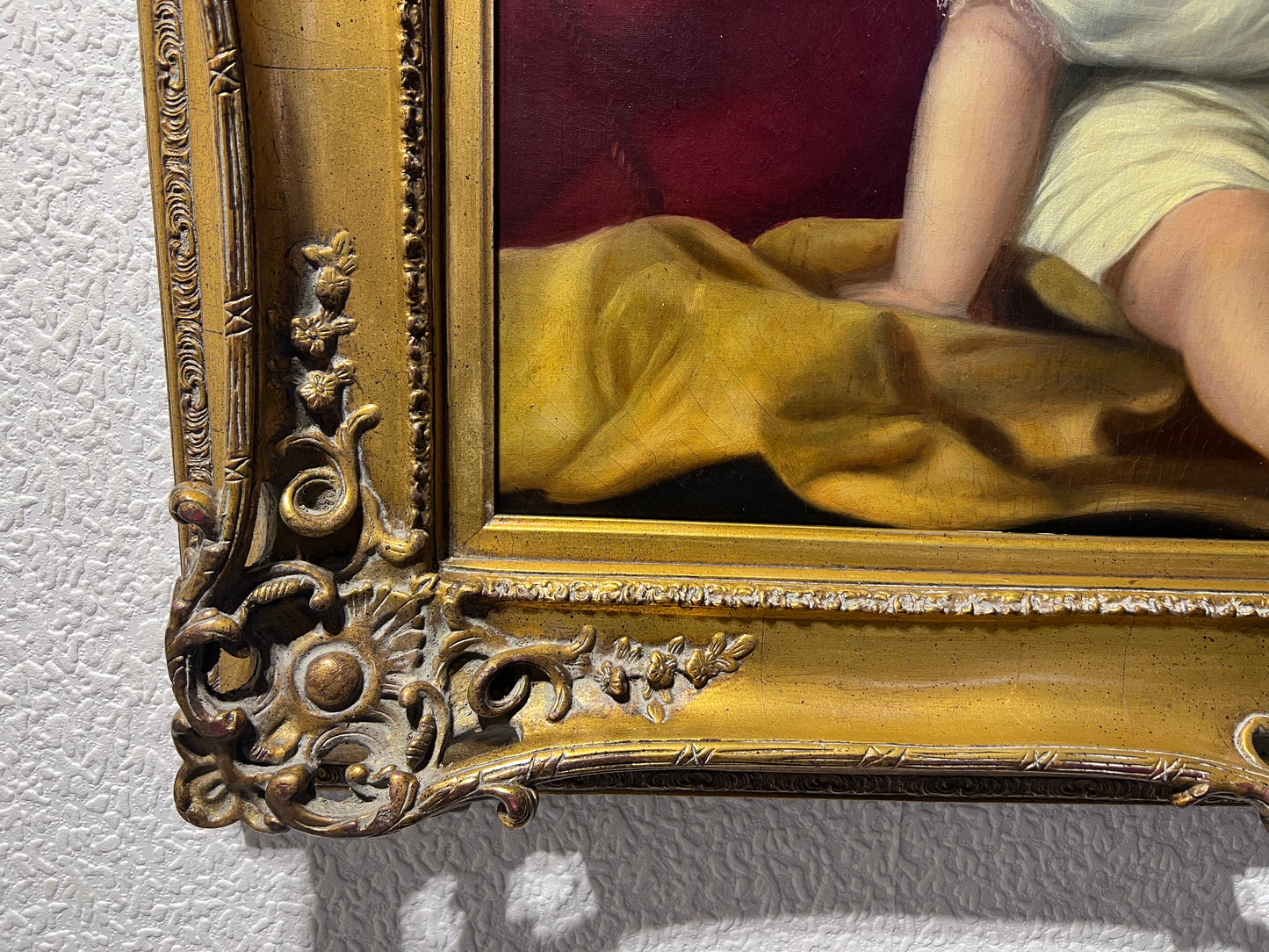
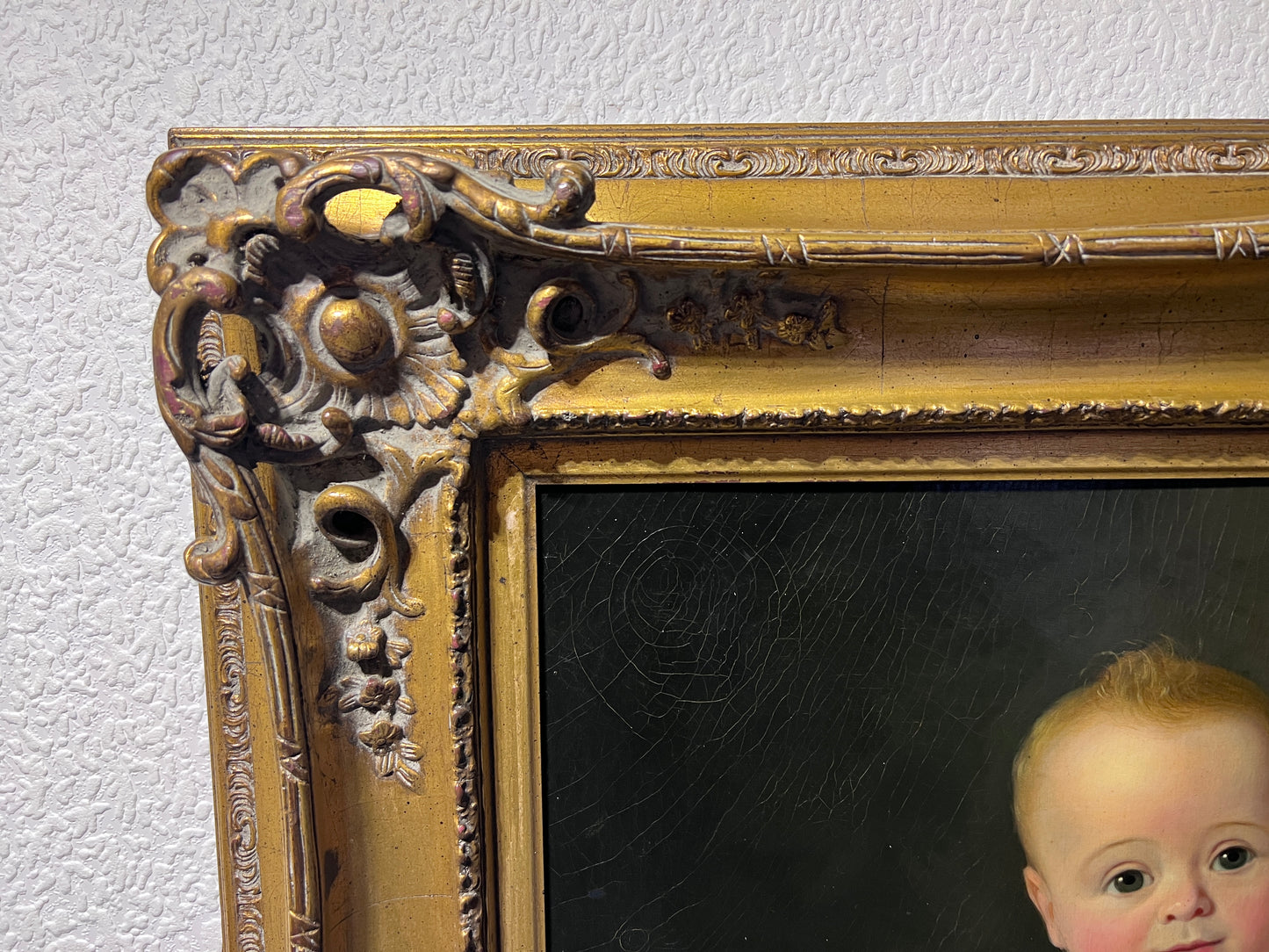
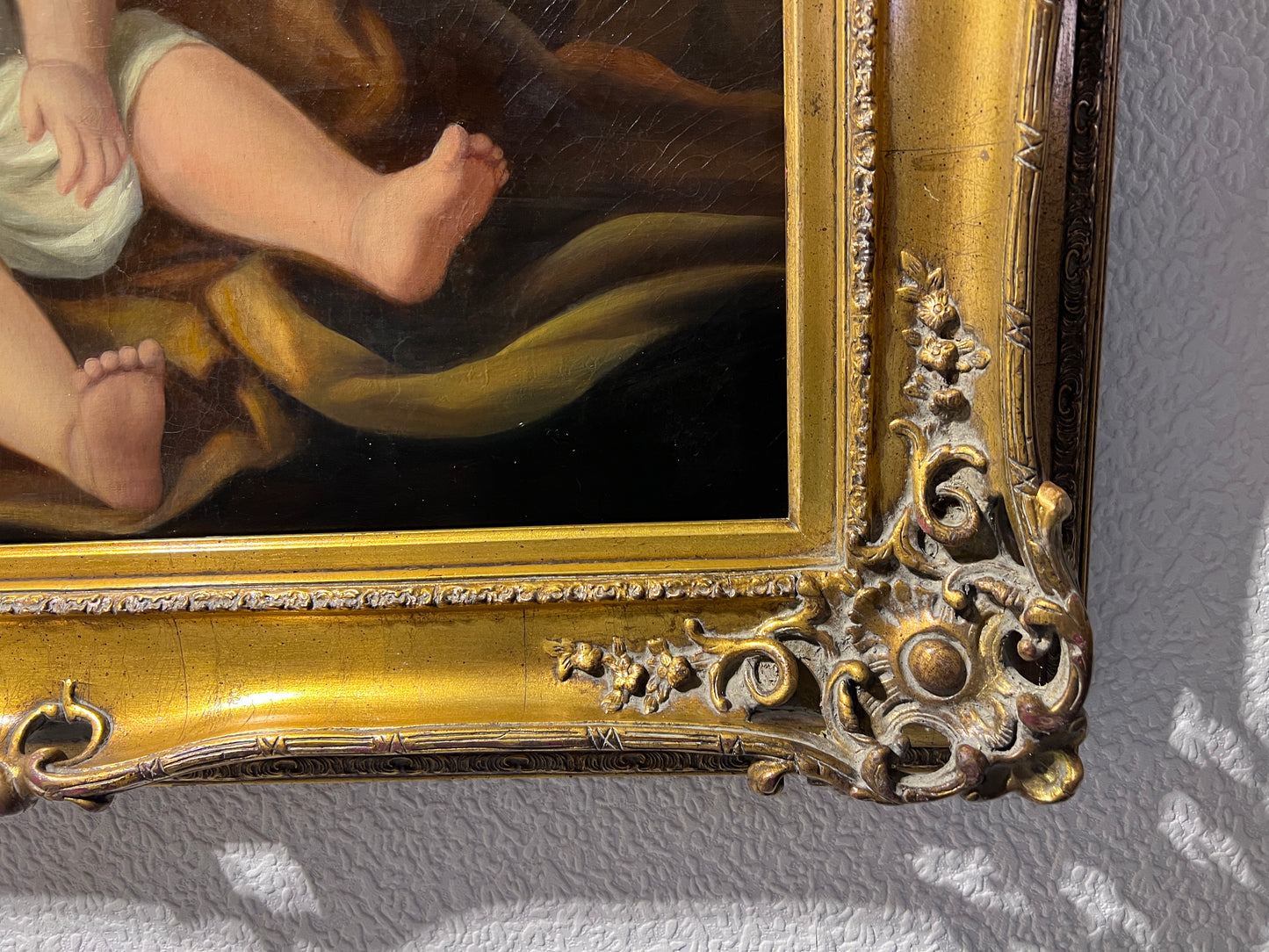
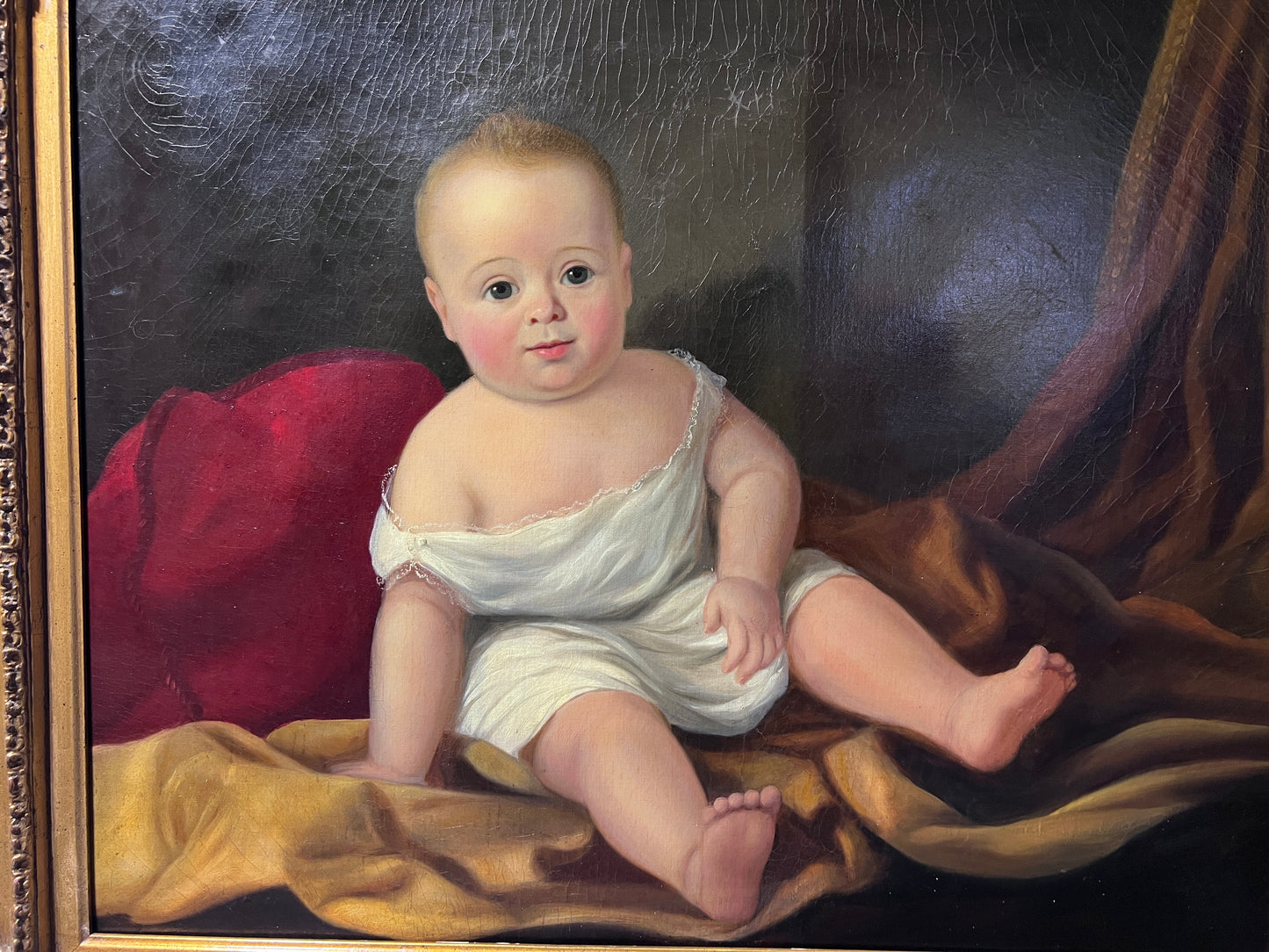
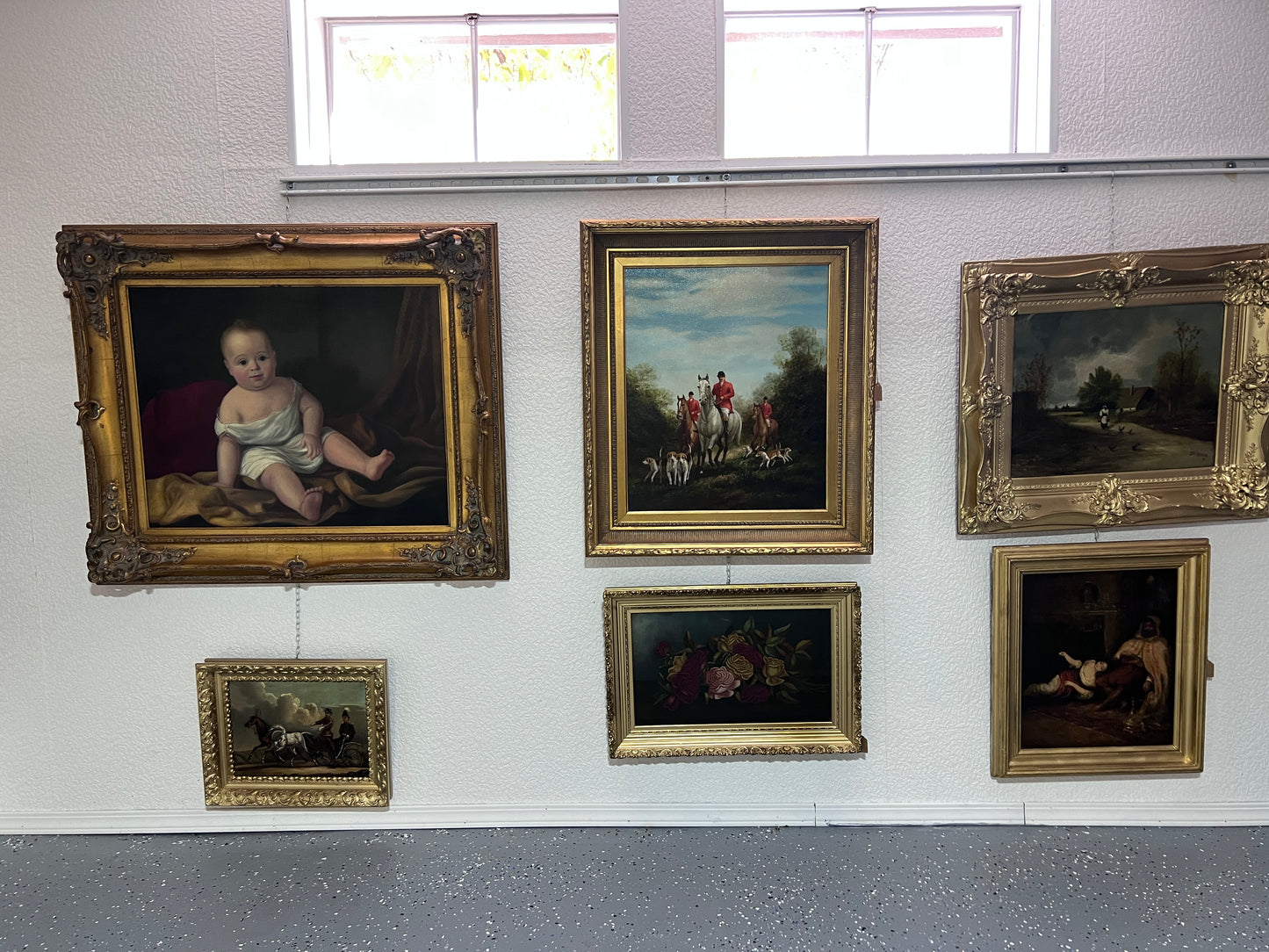
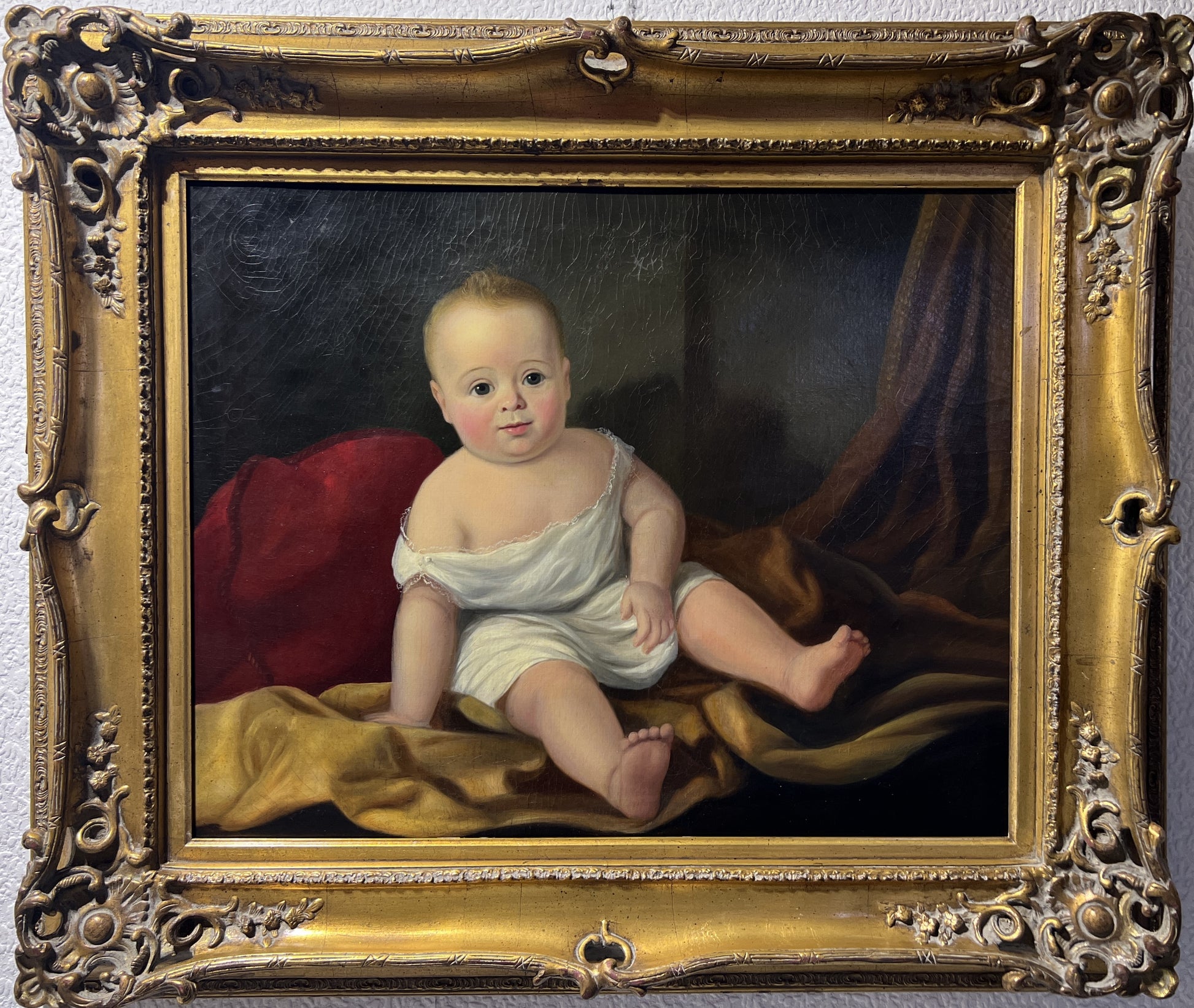
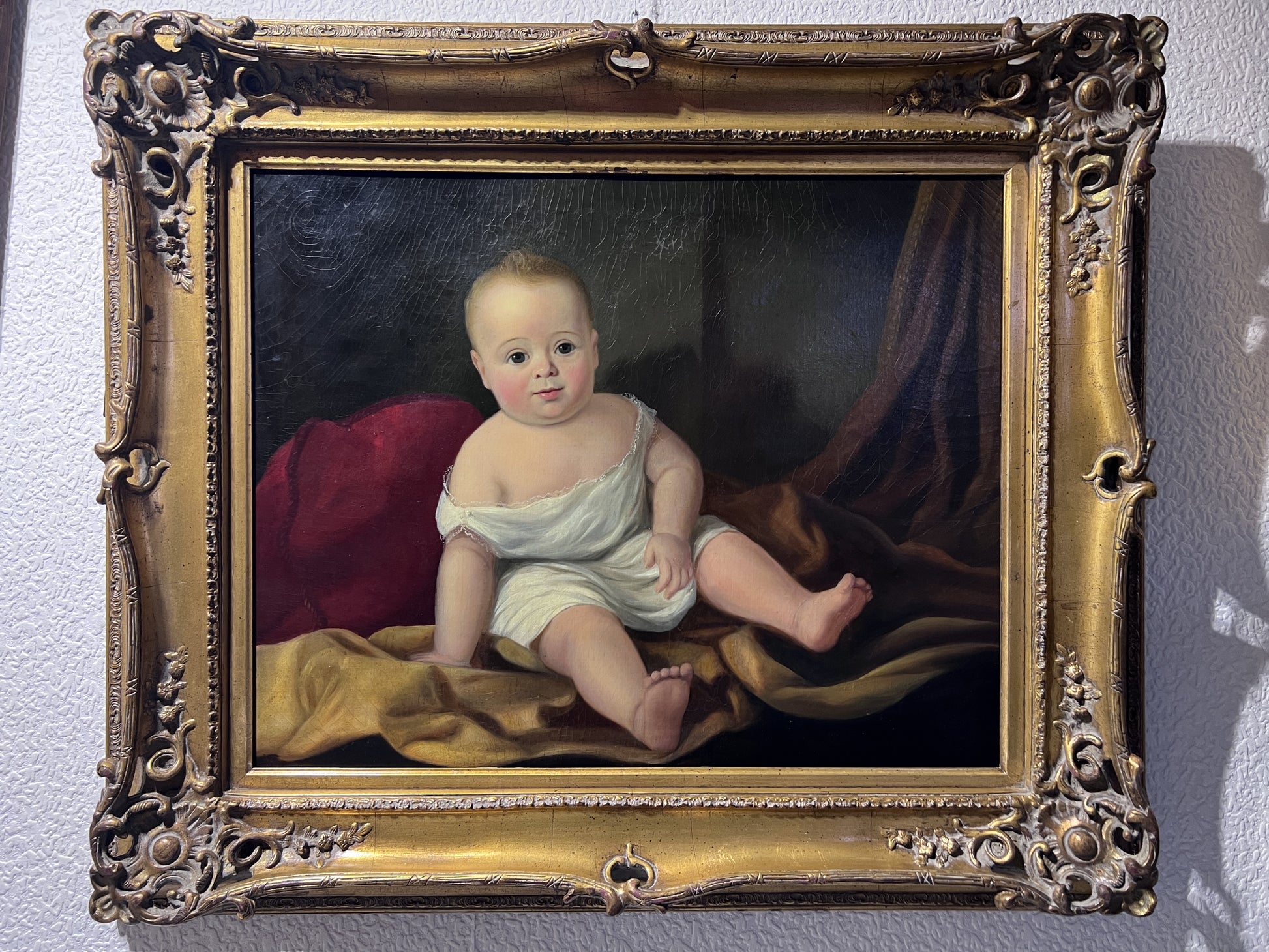
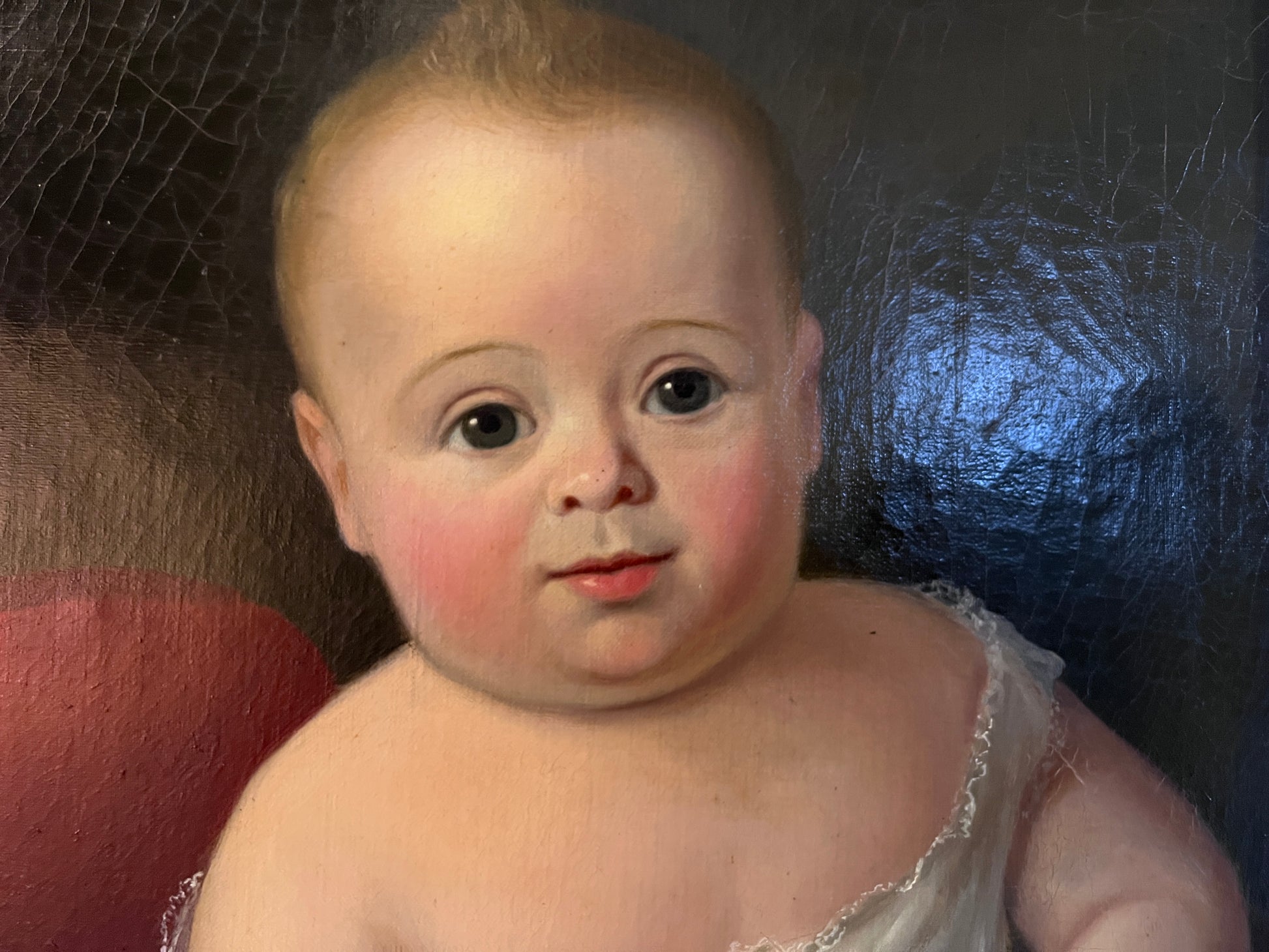
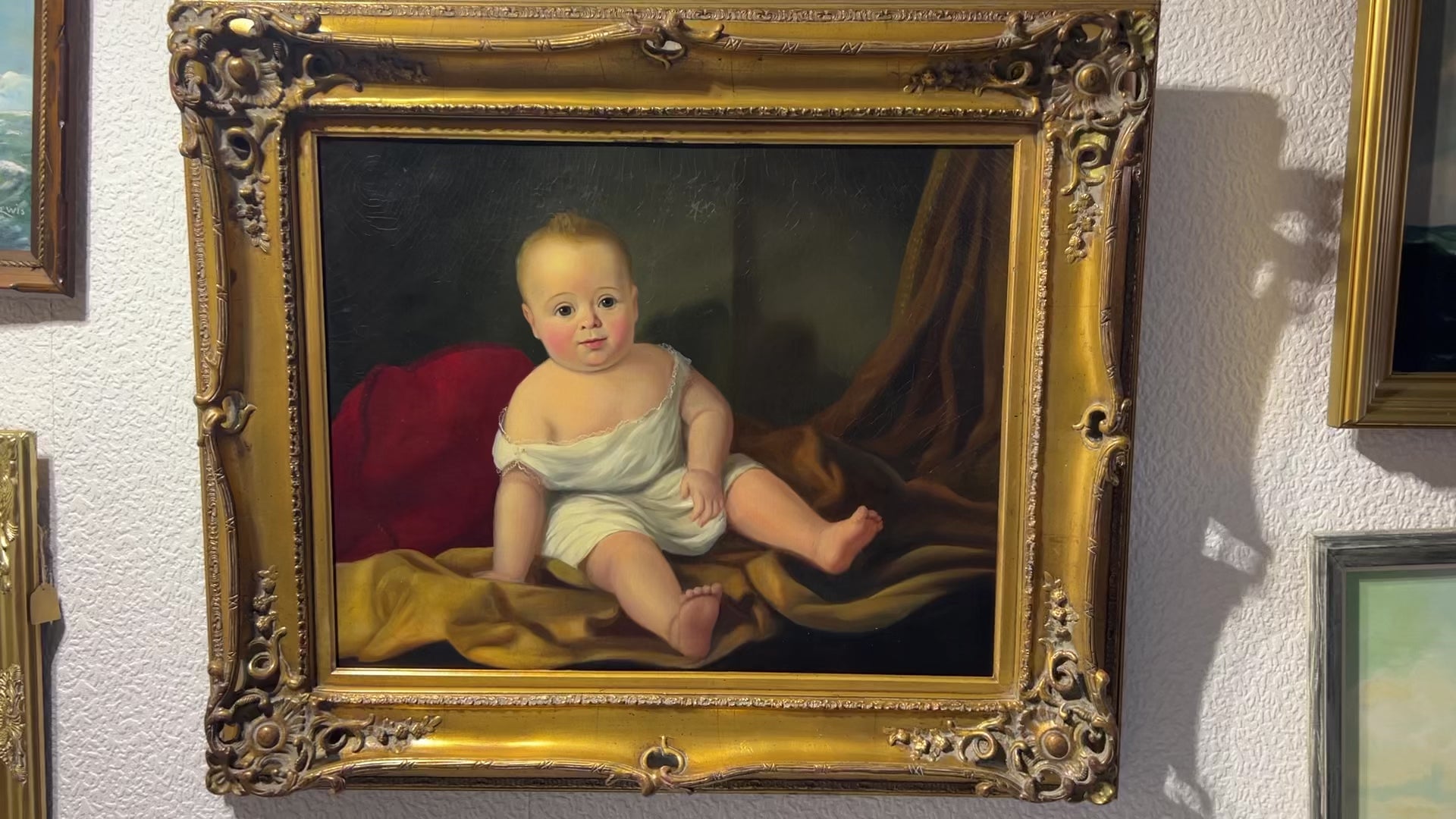
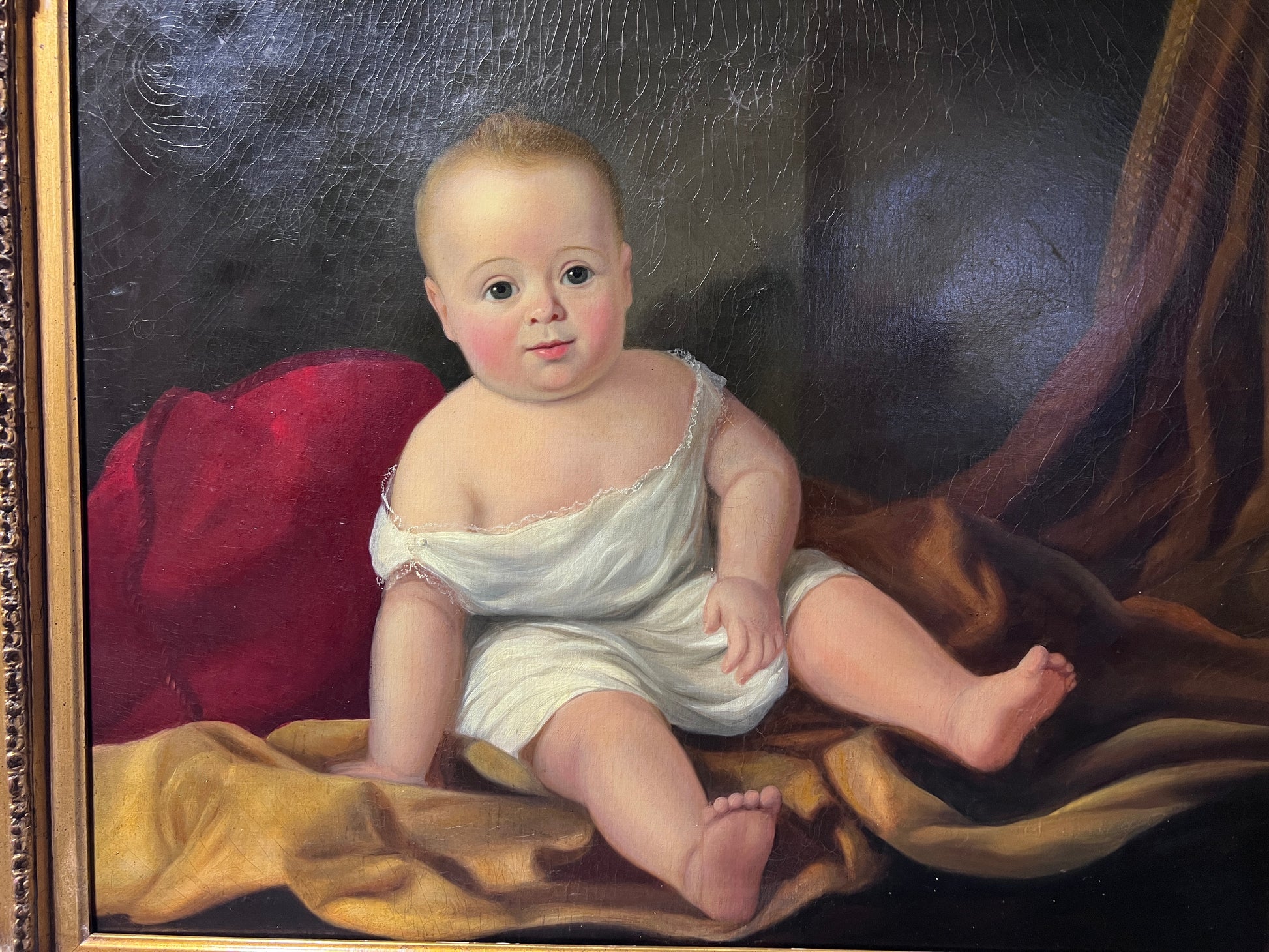
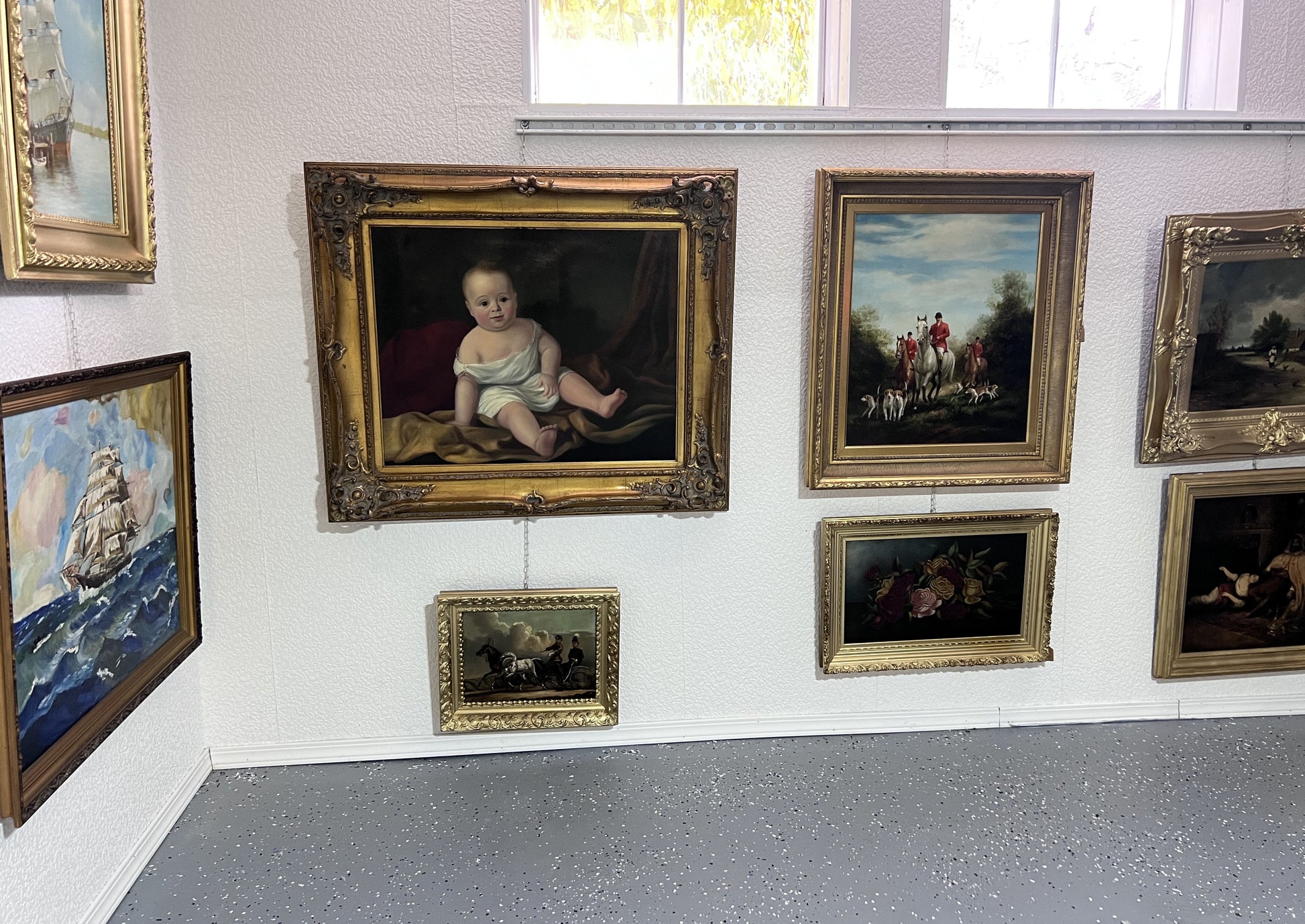
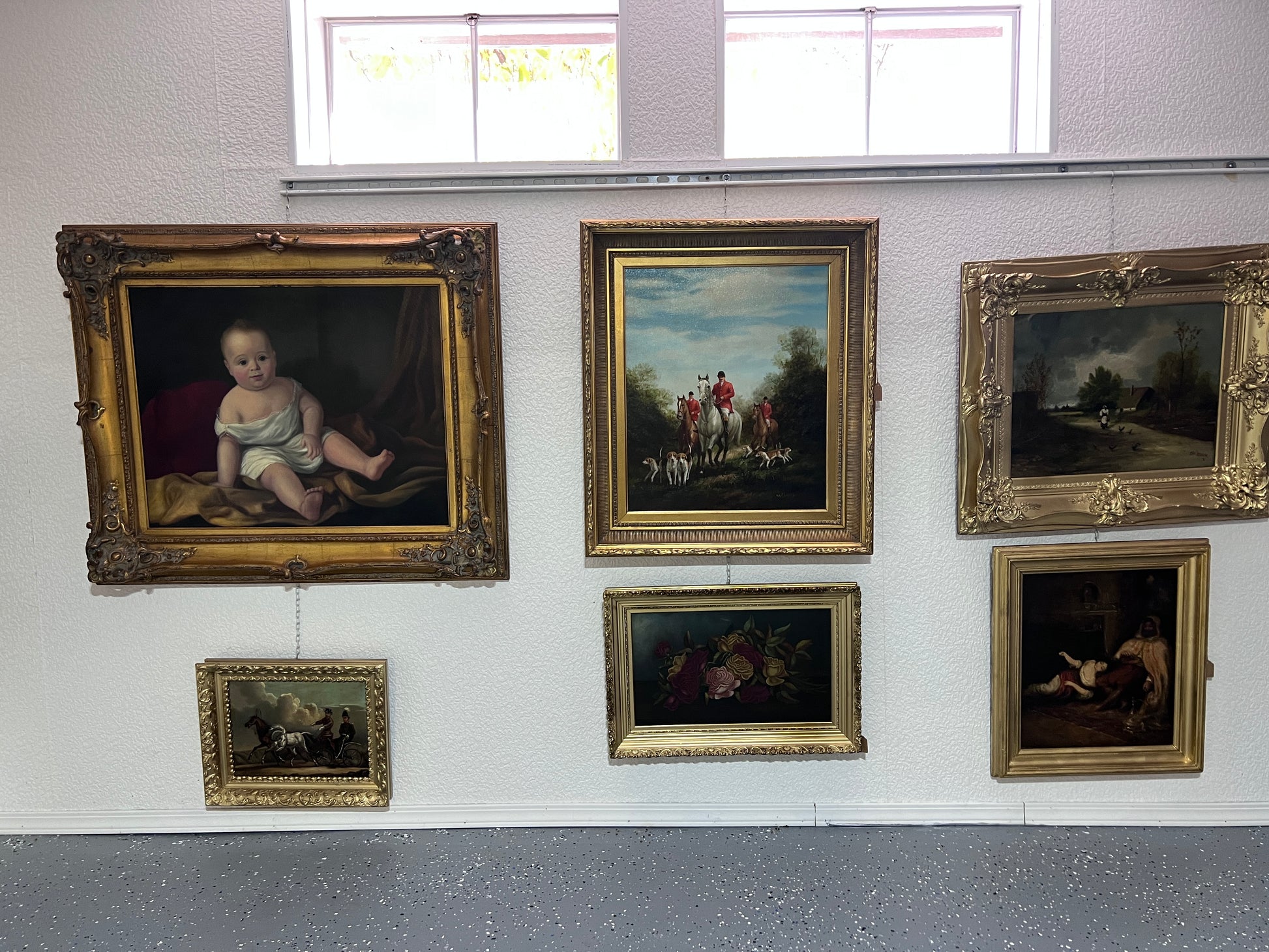
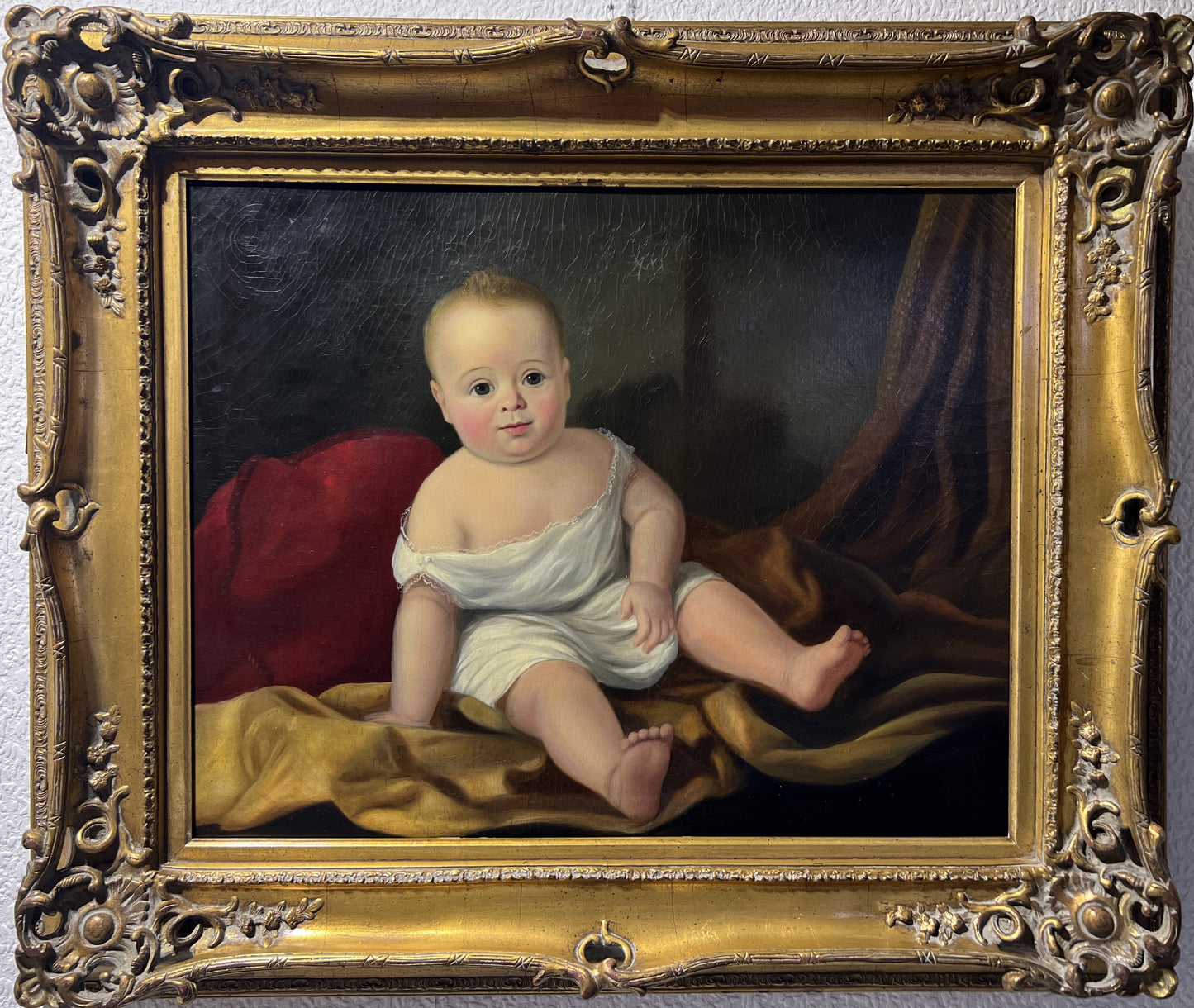
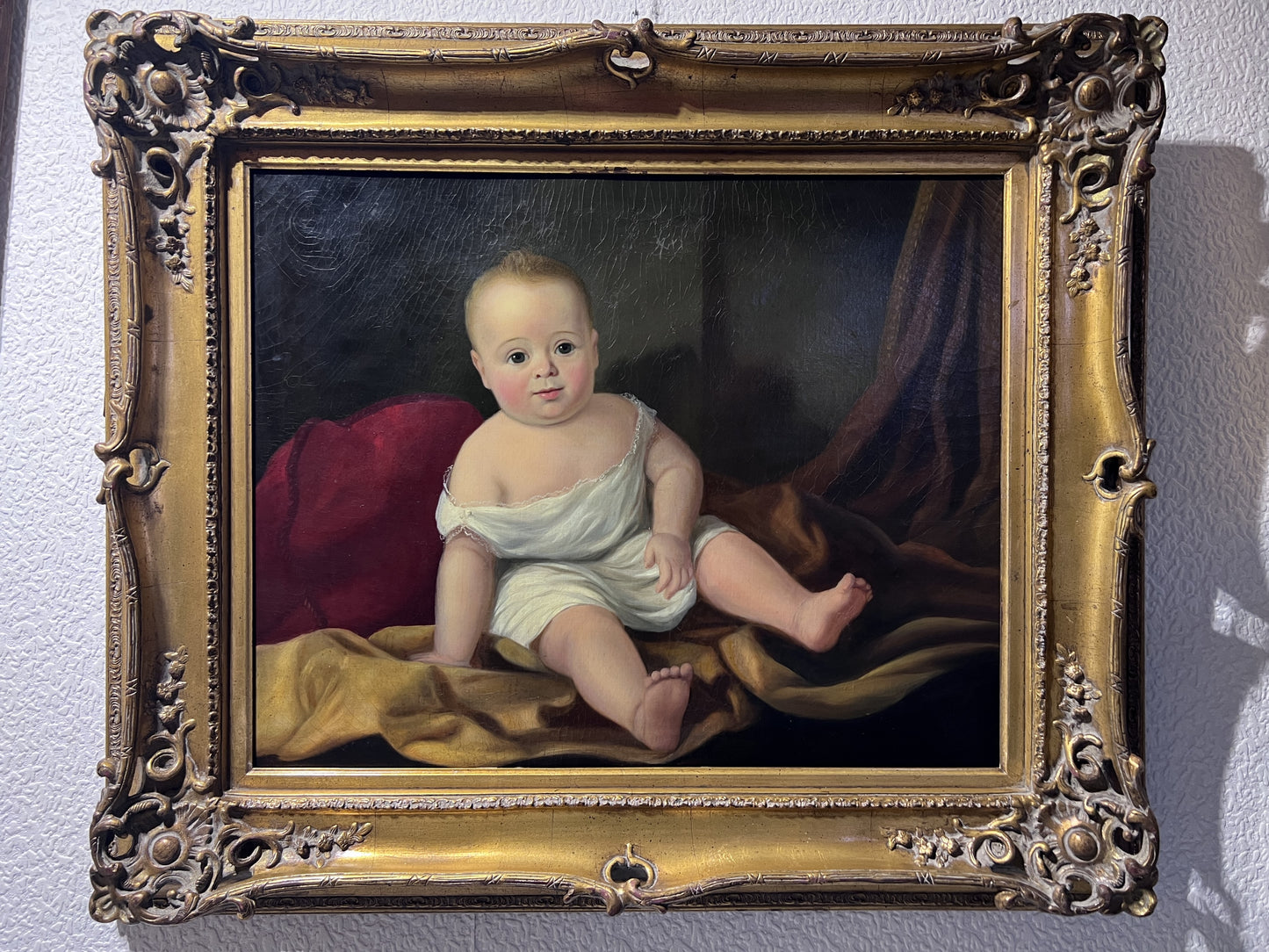
An important mid-19th century American oil on canvas portrait depicting a seated child, dated October 18, 1864 and attributed to John O’Brien Inman (1828–1896). The work embodies the refined sensibility of period portraiture, where technical discipline and emotional subtlety converge.

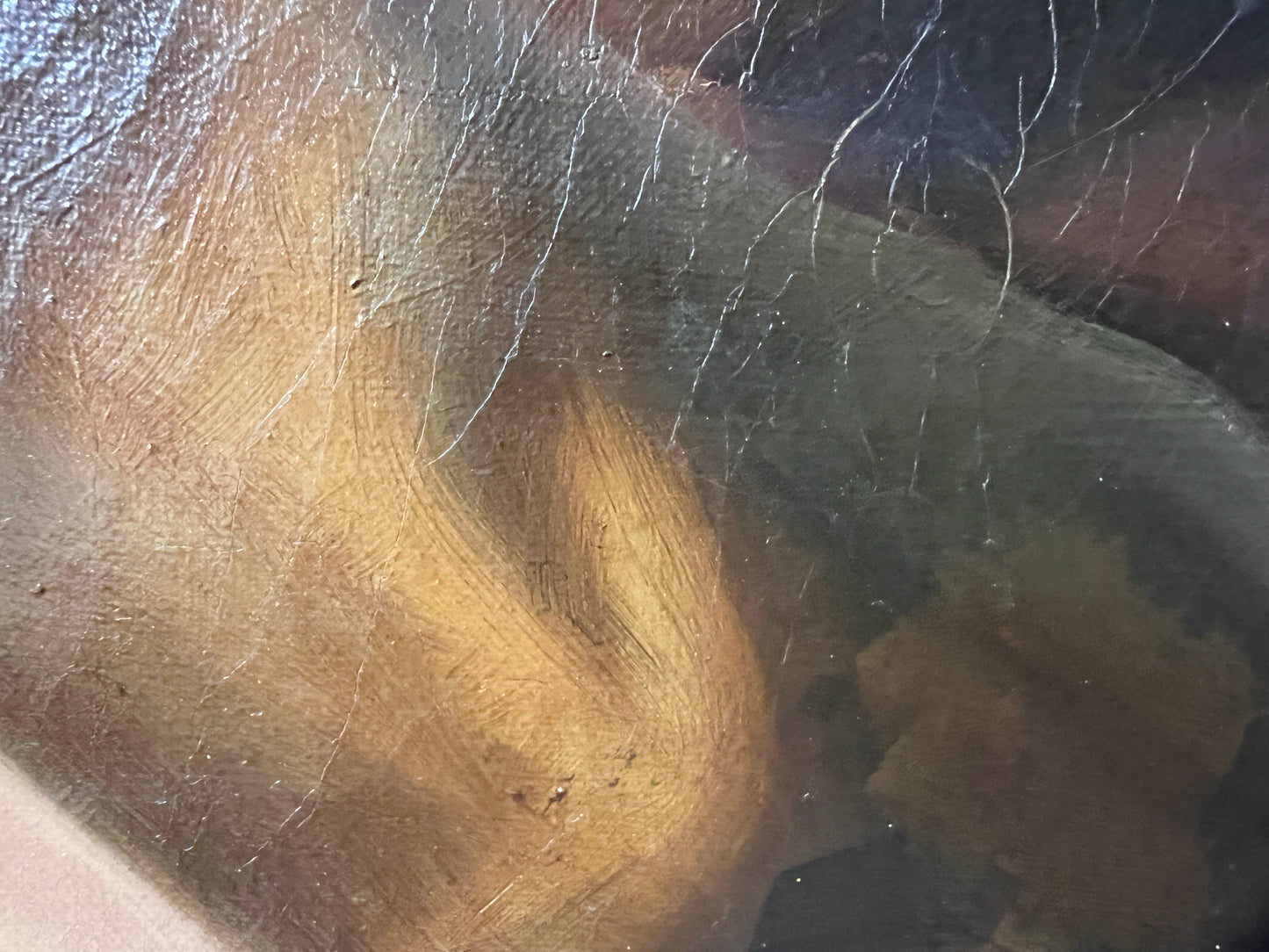
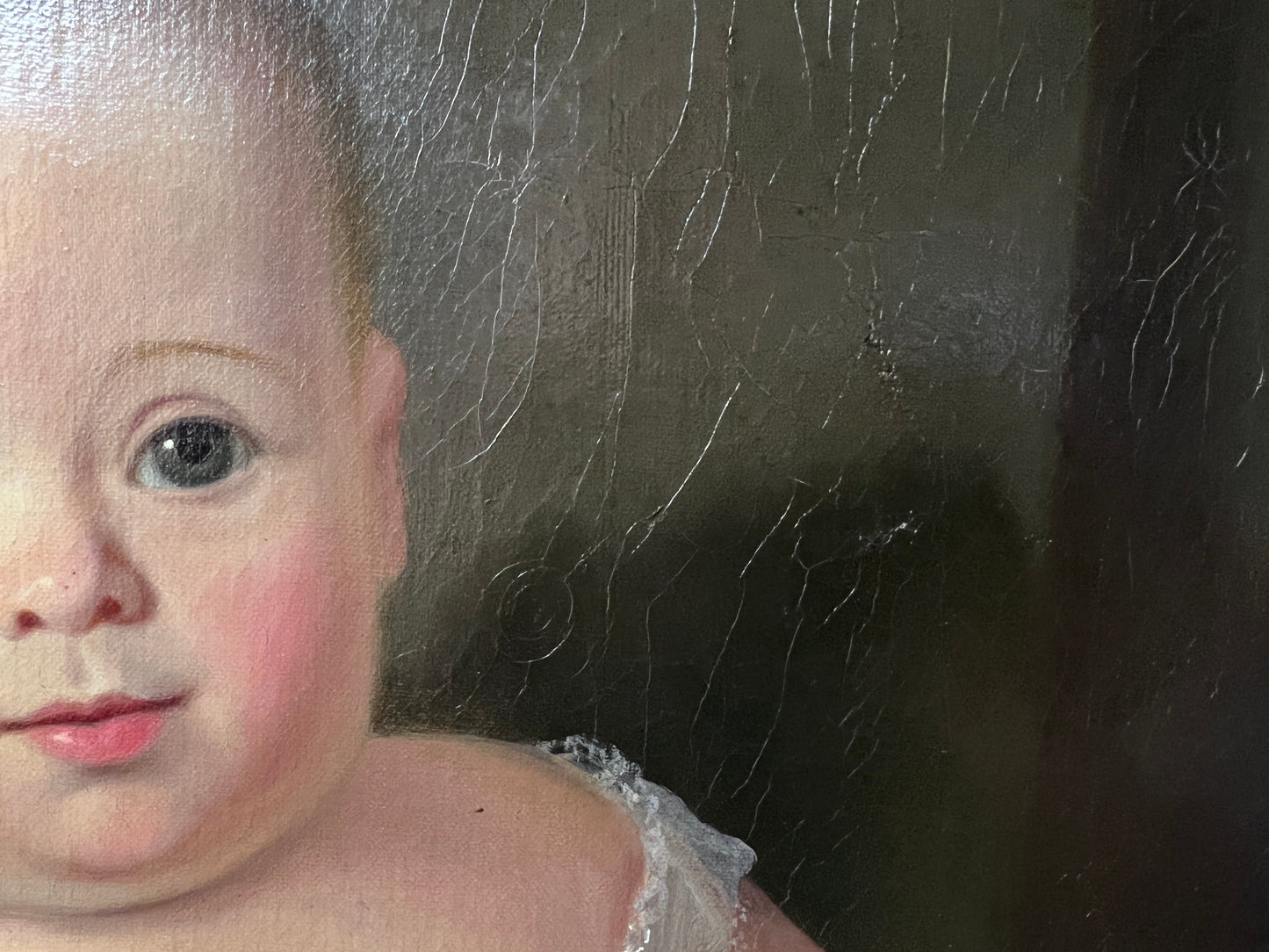
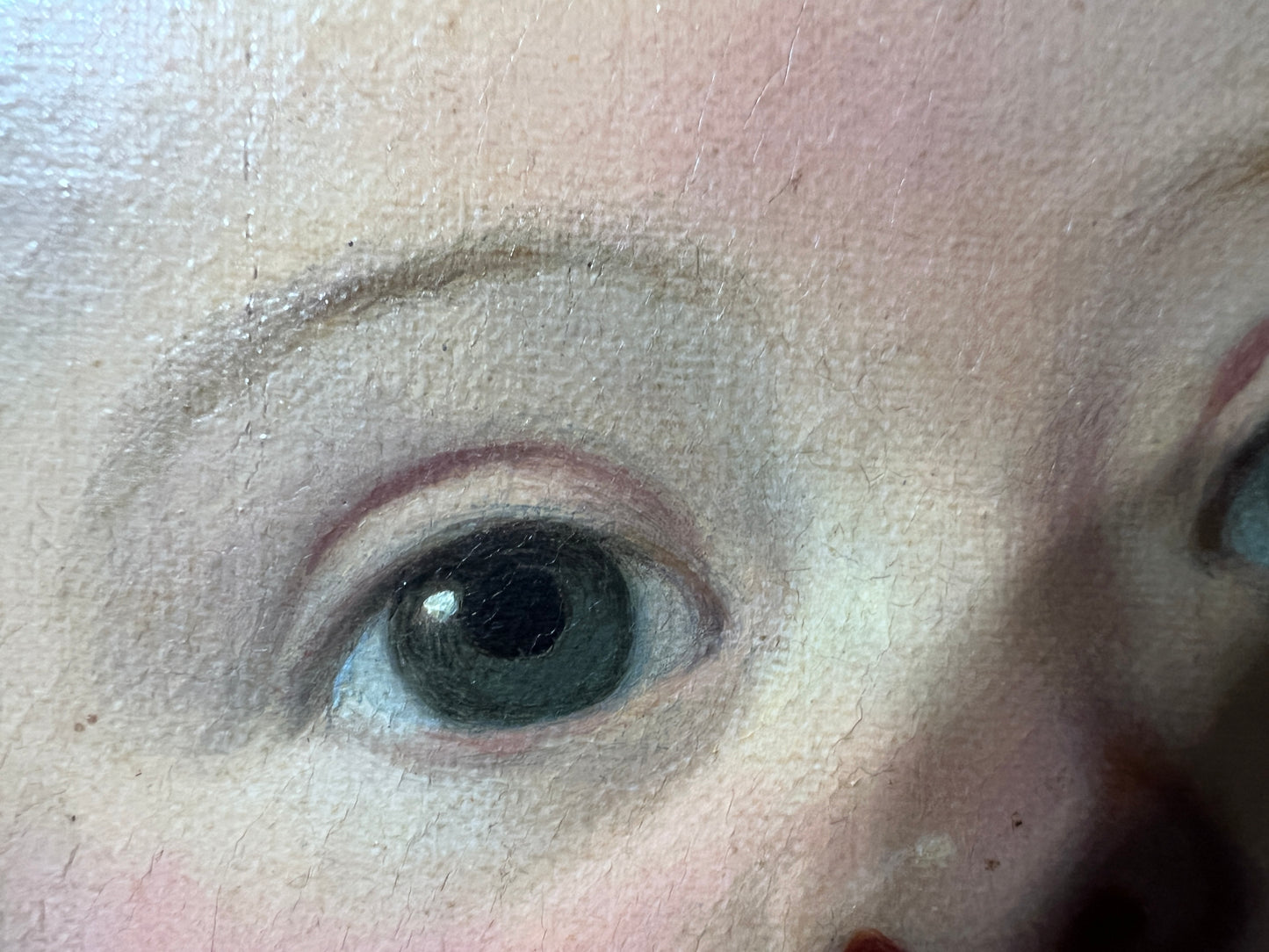
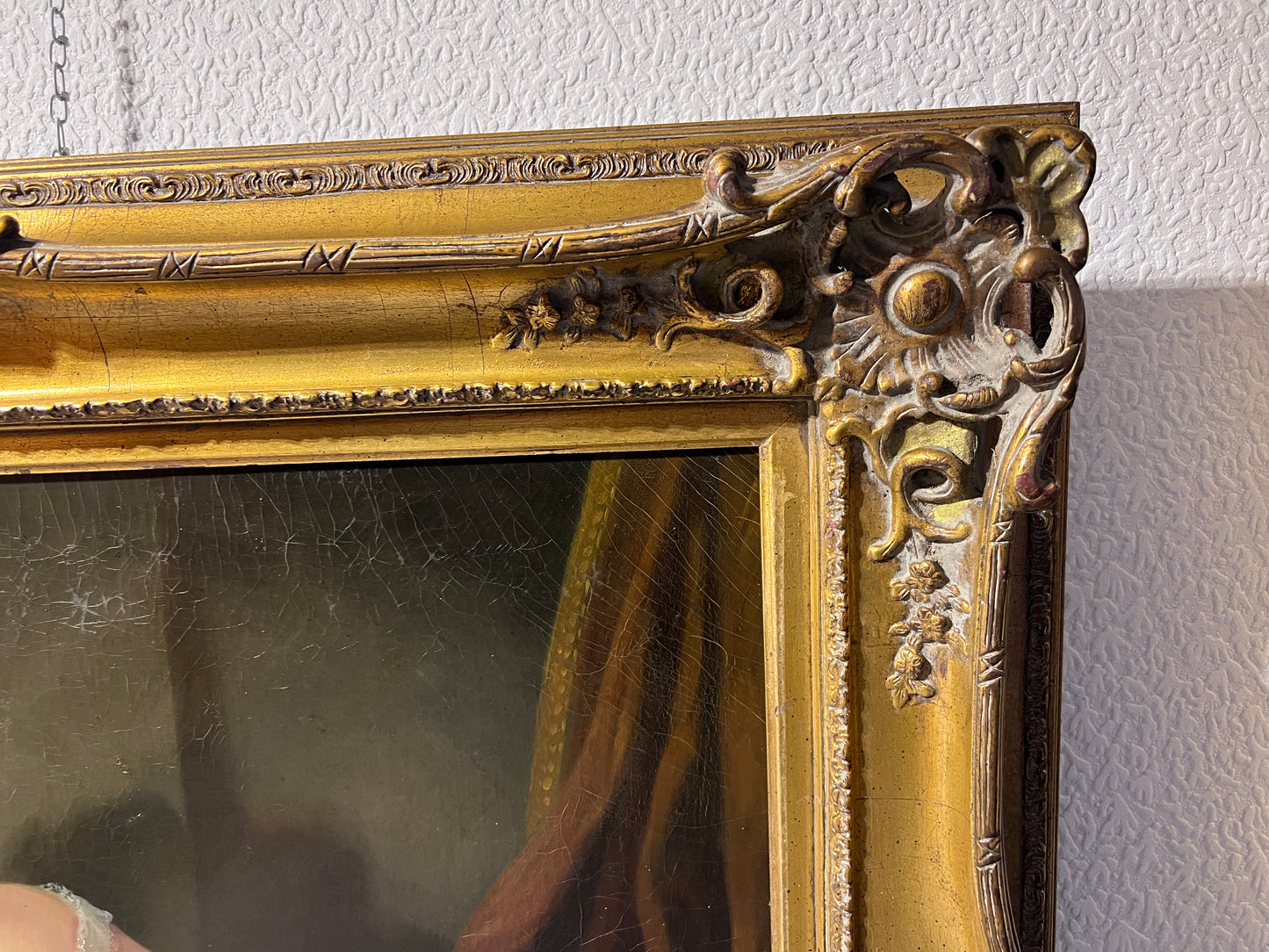
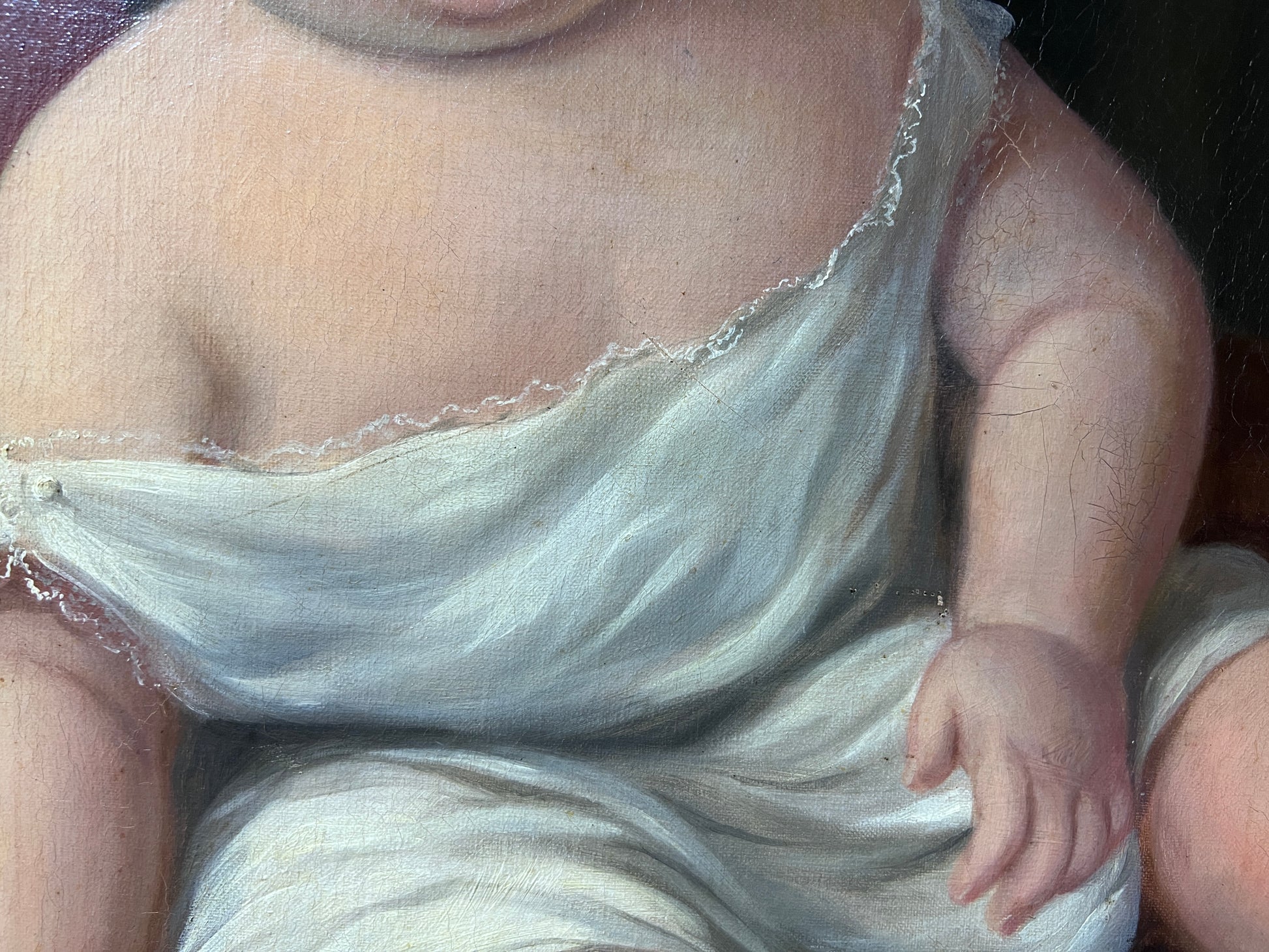
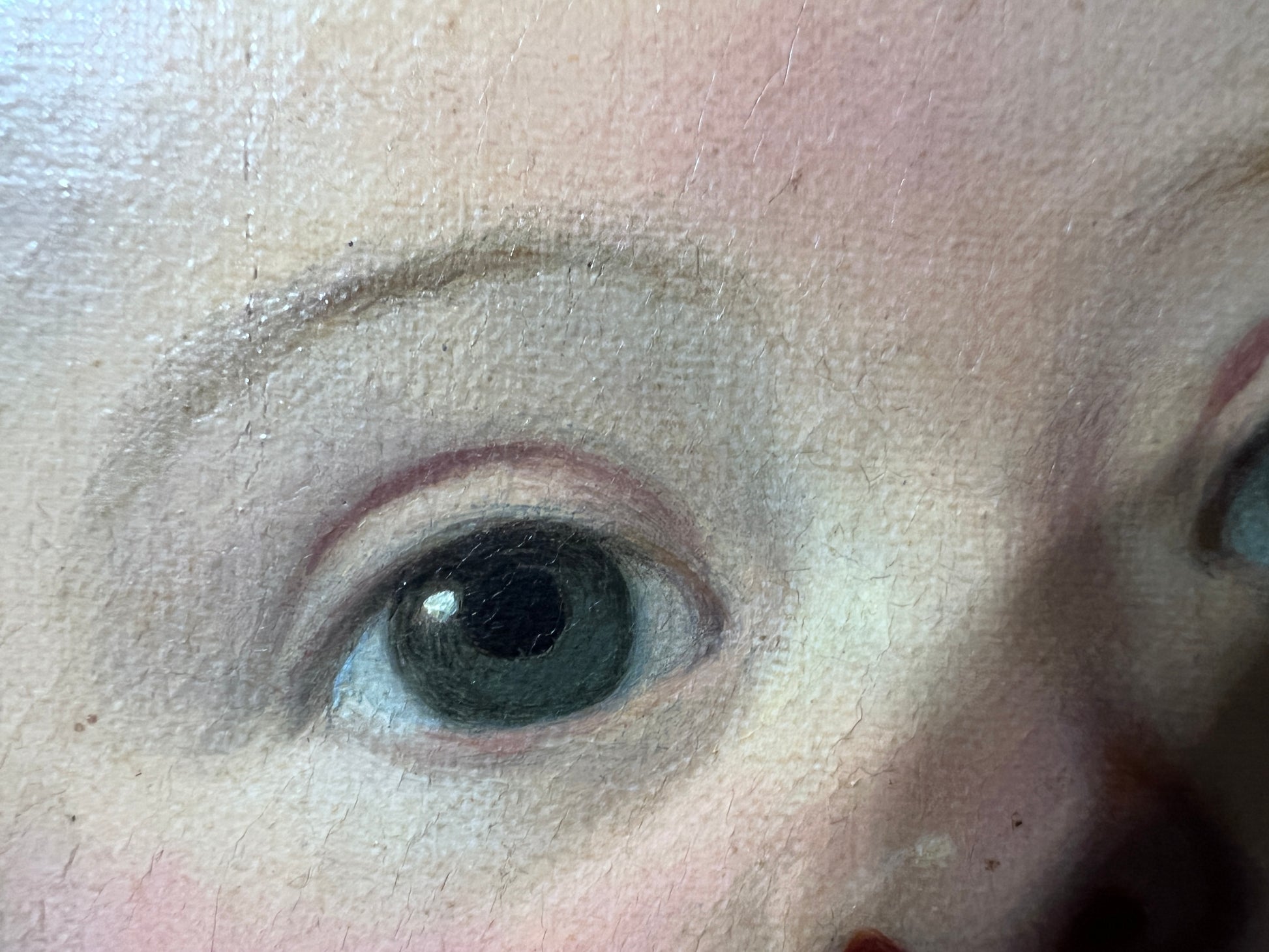
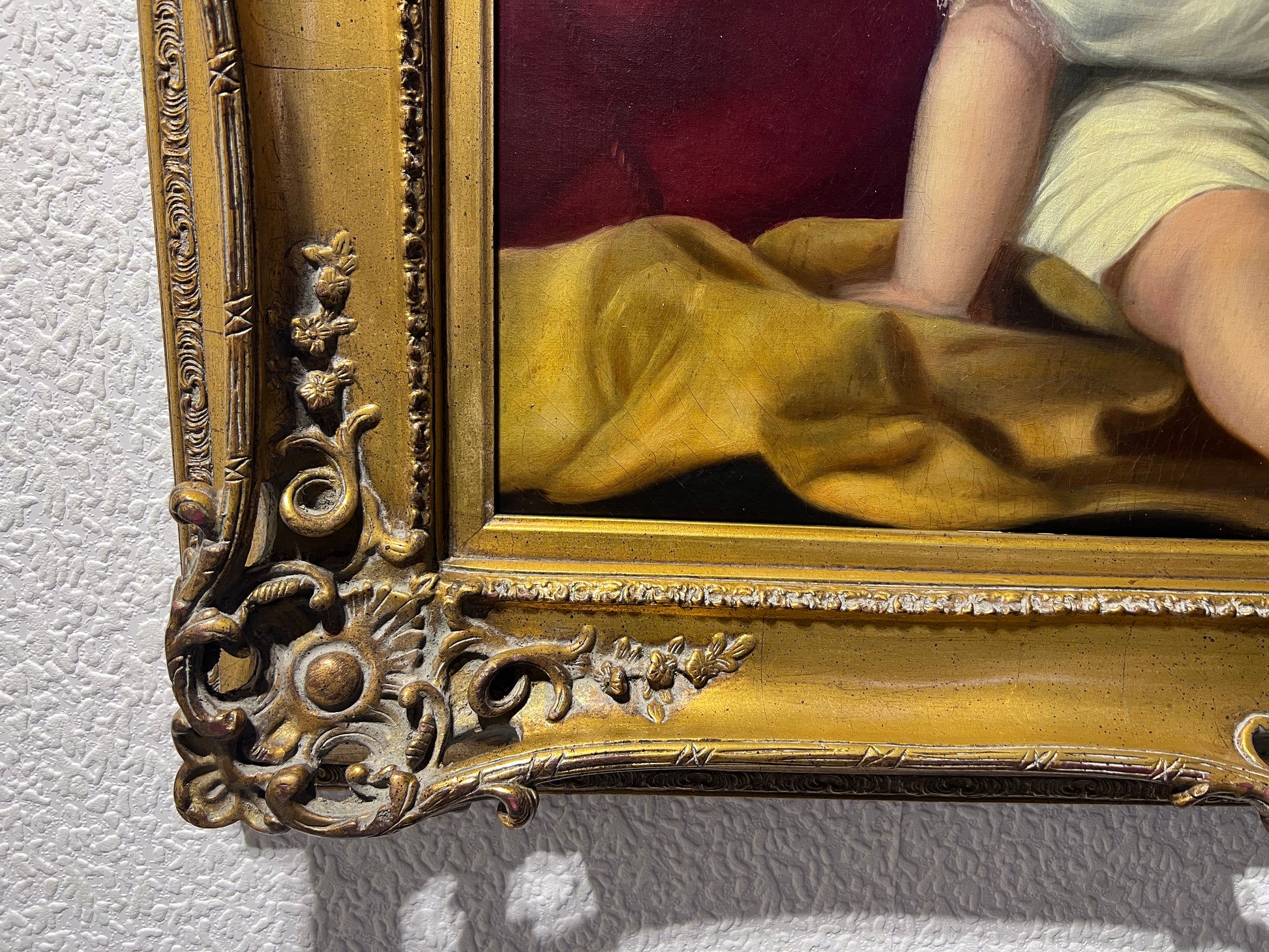
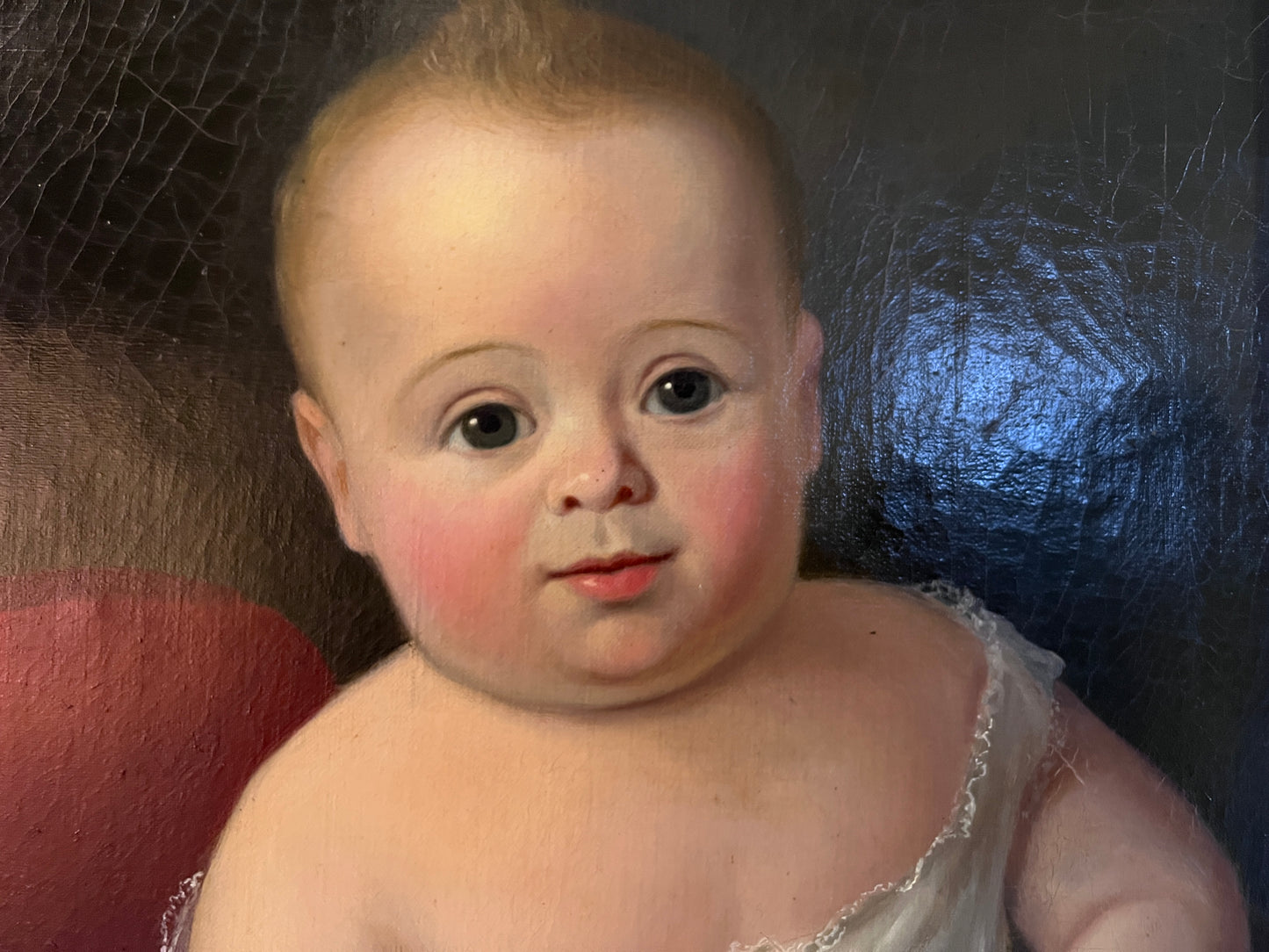
The composition is elegantly arranged, with the child set against a rich drapery backdrop rendered in deep, warm tones that enhance the luminous modeling of the figure. The artist demonstrates a confident academic hand—visible in the delicate transitions of flesh tones, the softness of expression, and the controlled handling of light. The direct yet gentle gaze captures a fleeting moment of childhood with remarkable intimacy.

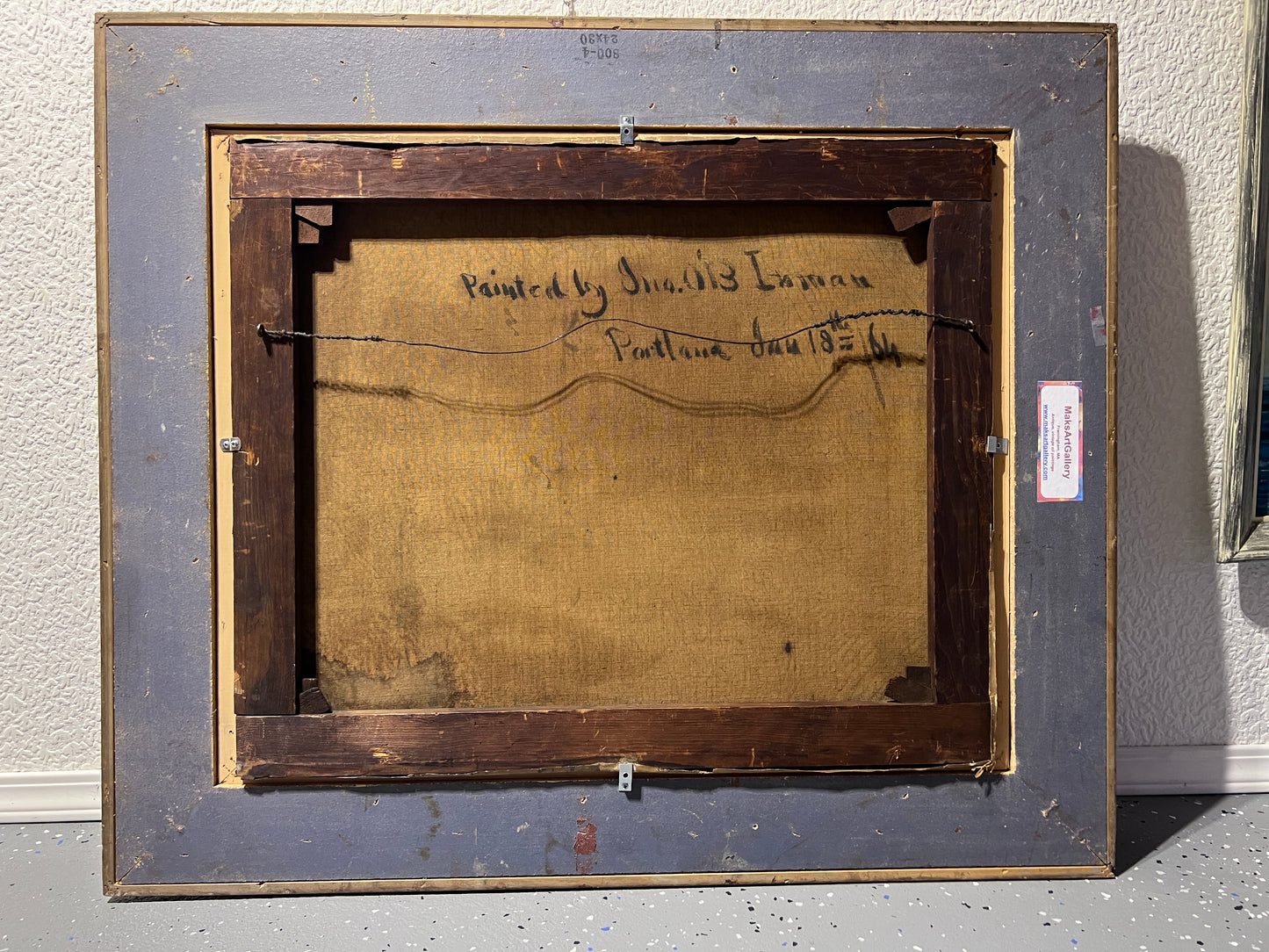
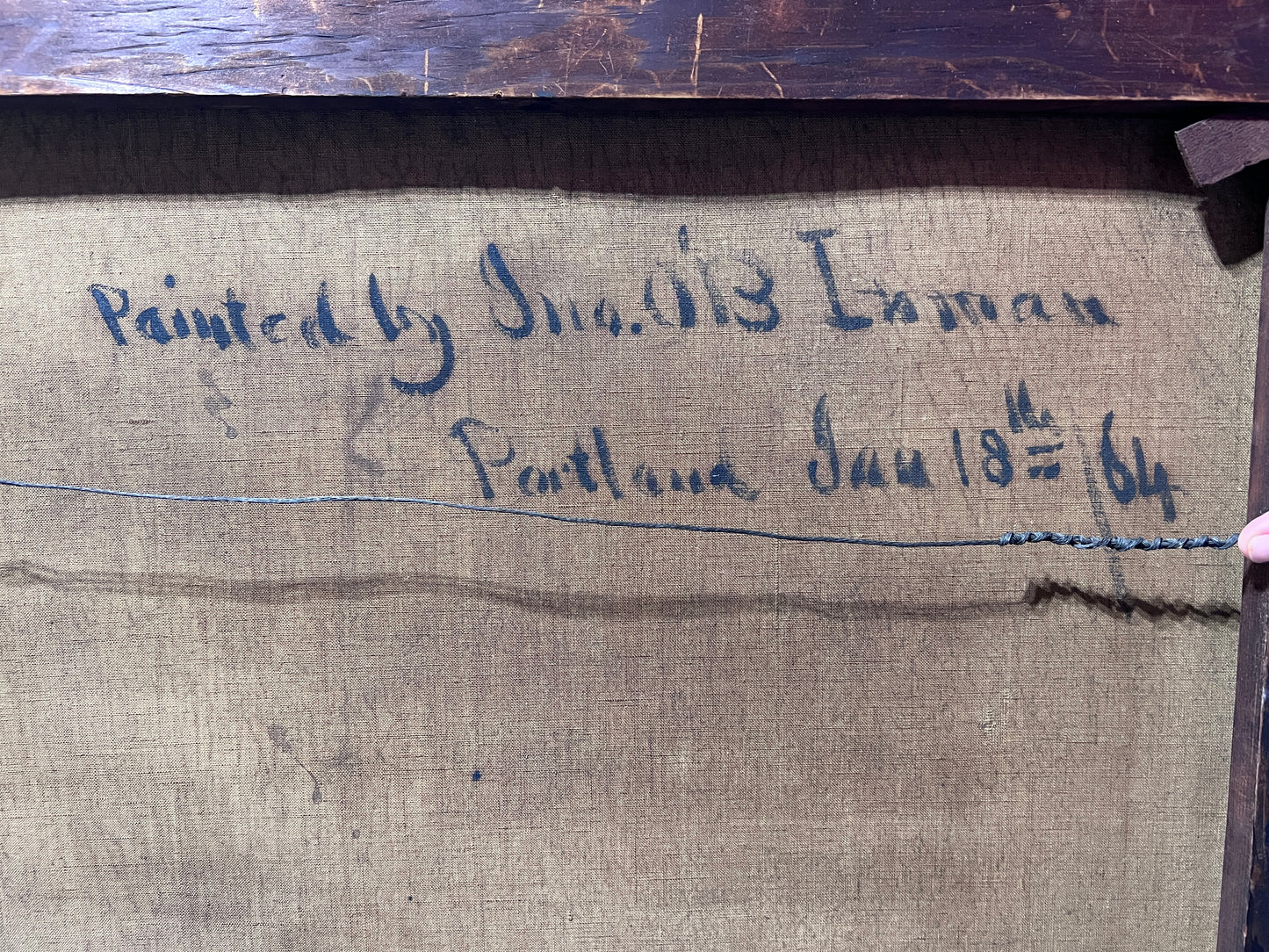
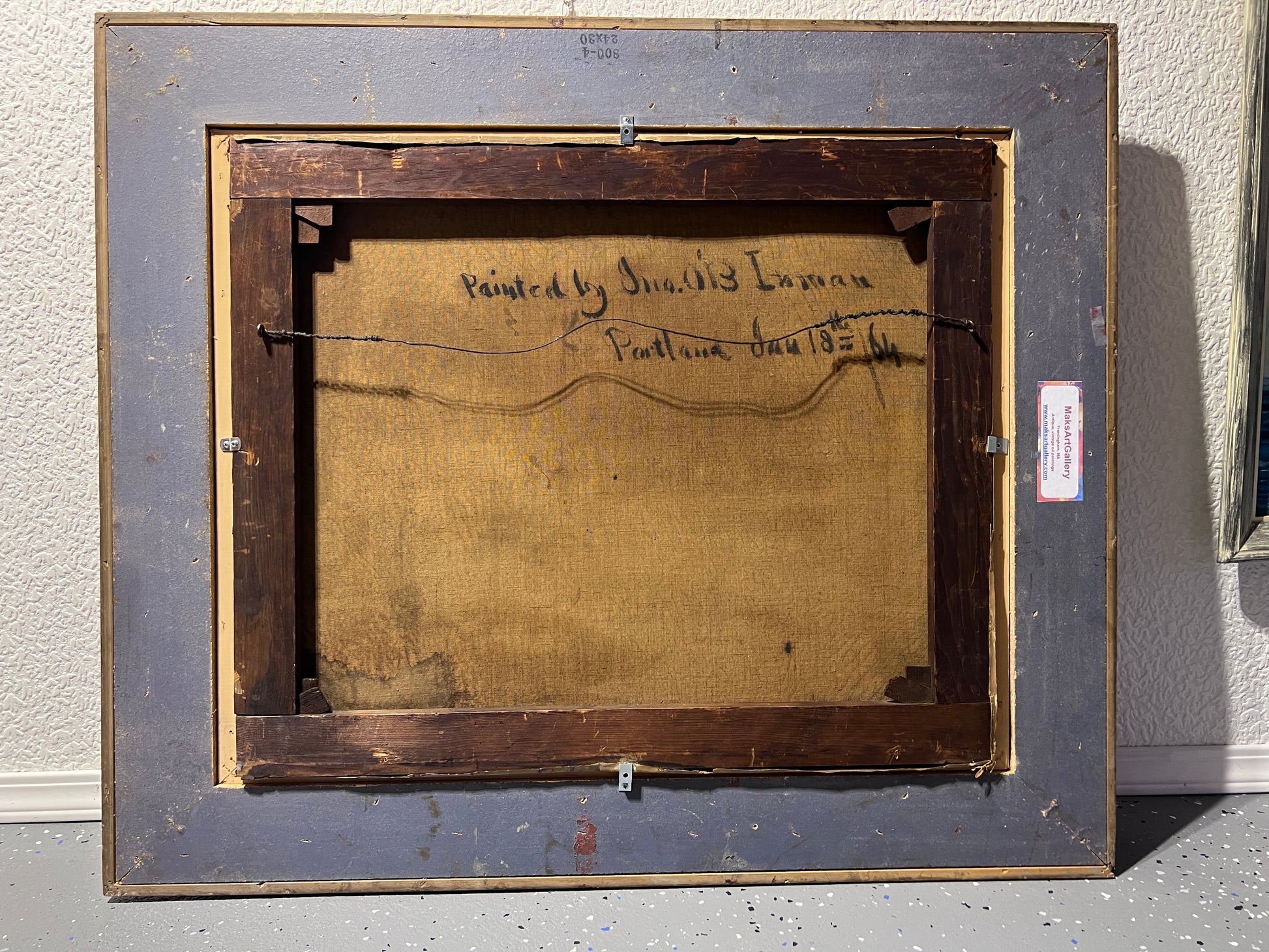
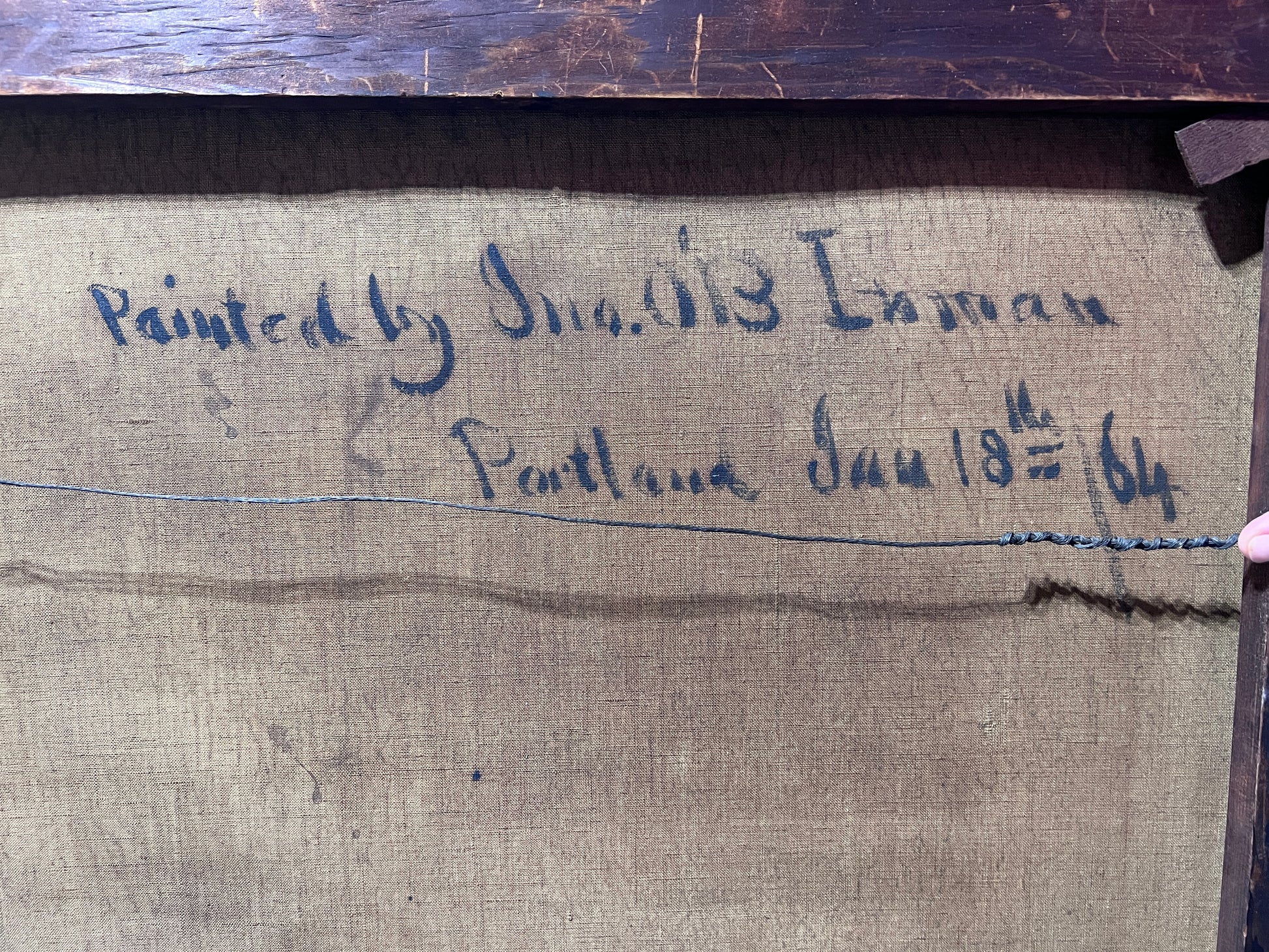
Executed within the tradition of American portrait painting of the mid-19th century, the work reflects the cultural importance of commissioned portraiture as a means of preserving family legacy. The quality of execution, combined with the presence of a fully written inscription on the reverse in a manner consistent with 19th-century hand, strongly supports the attribution.

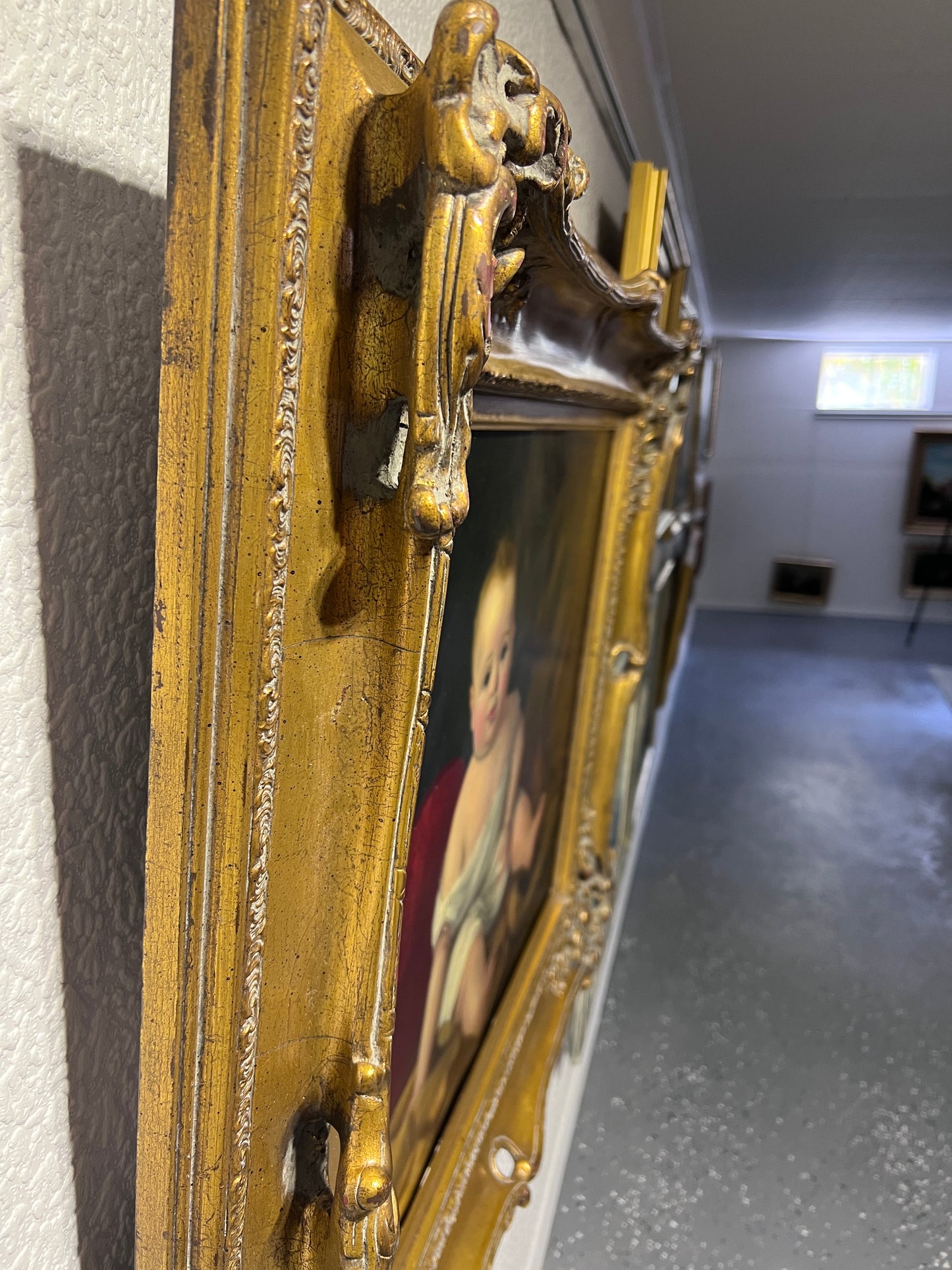
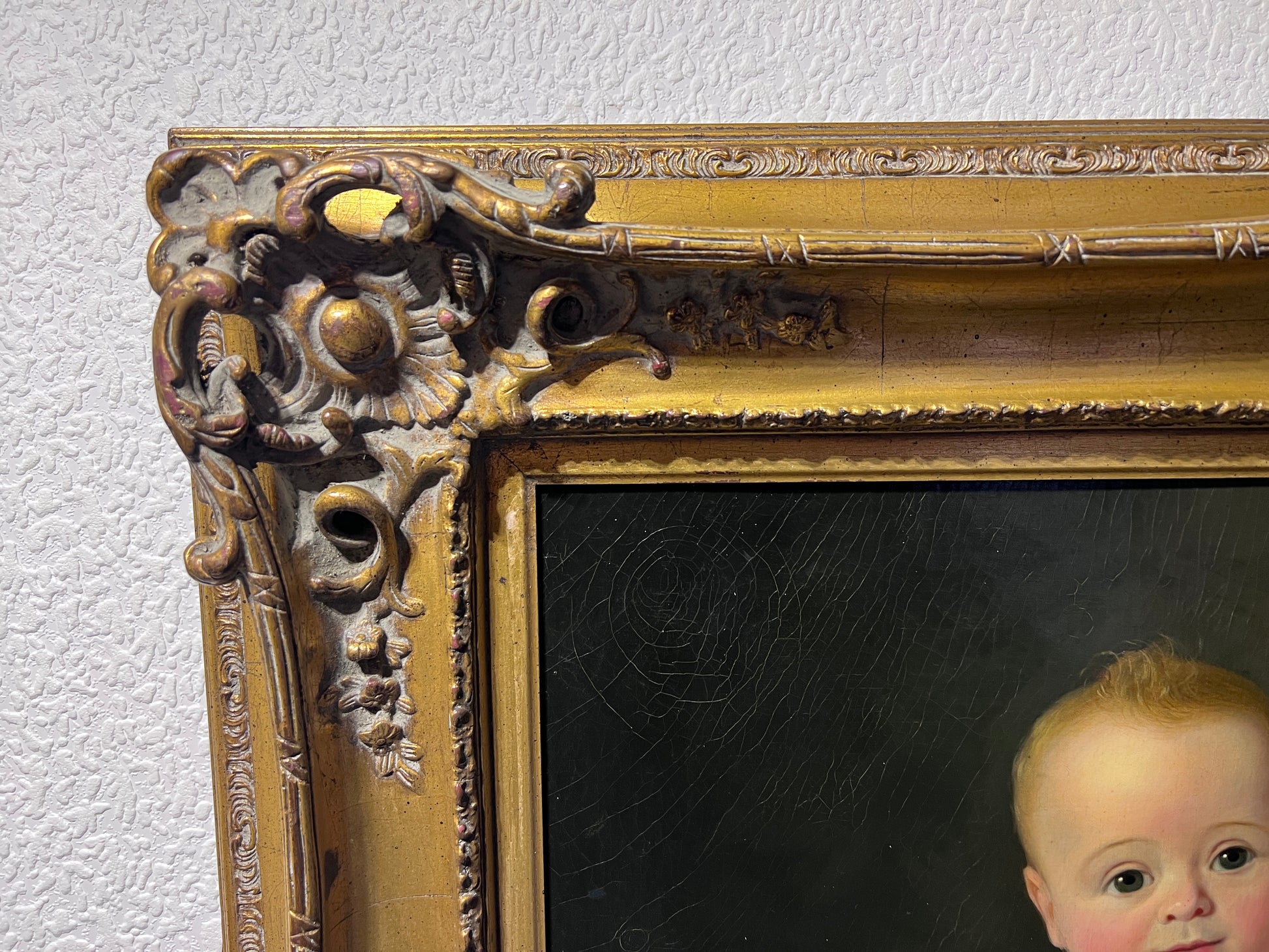
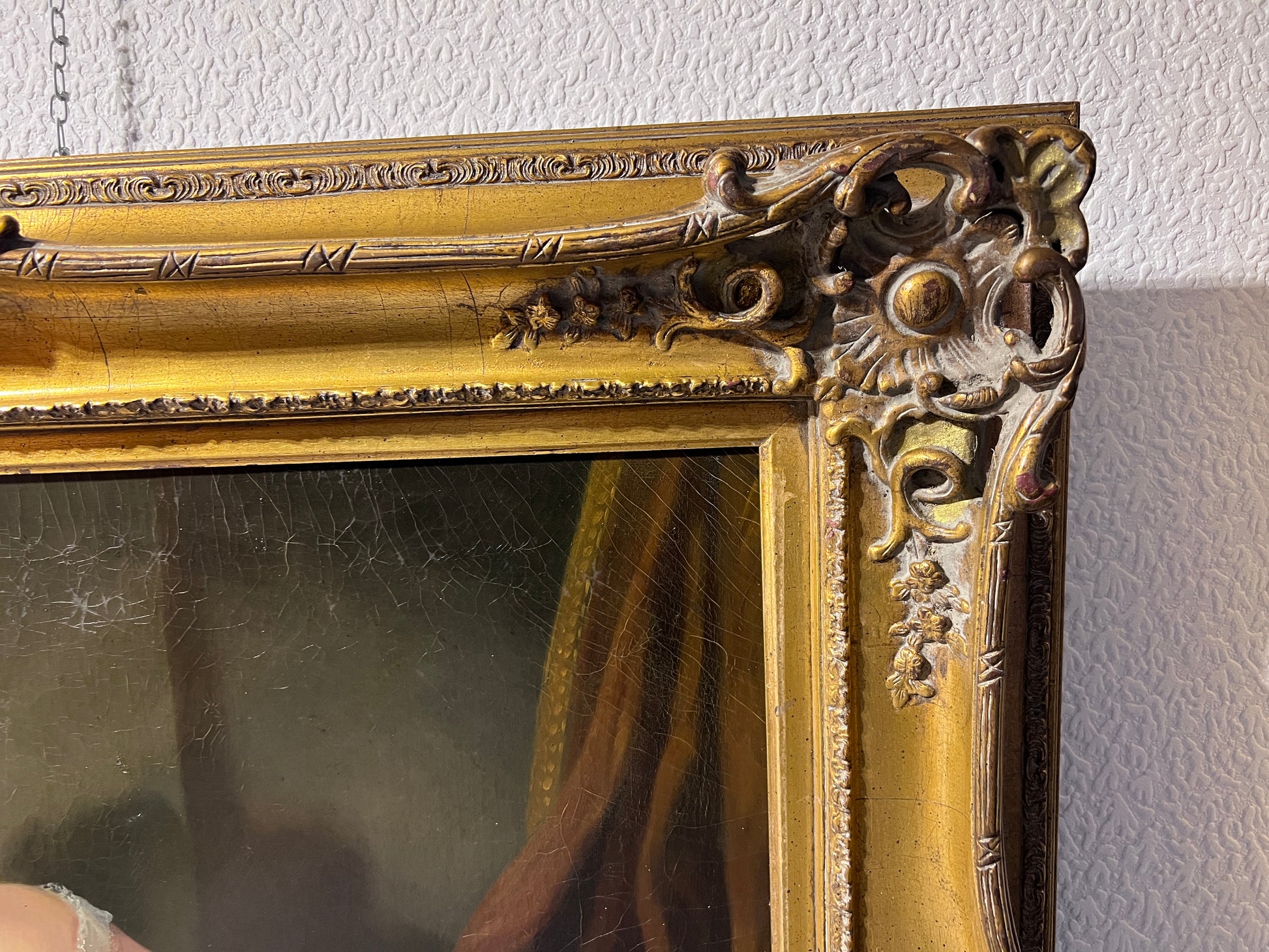
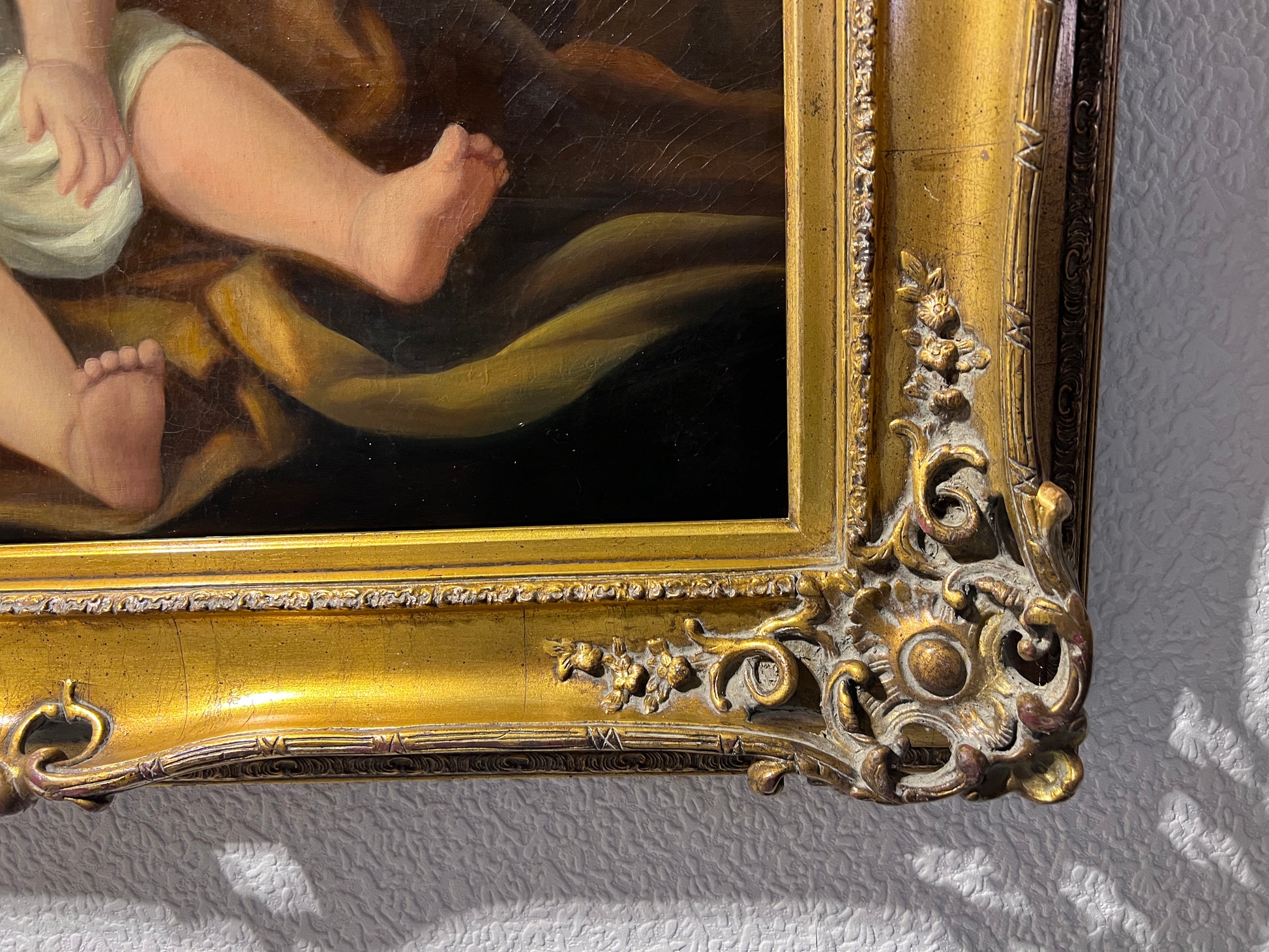
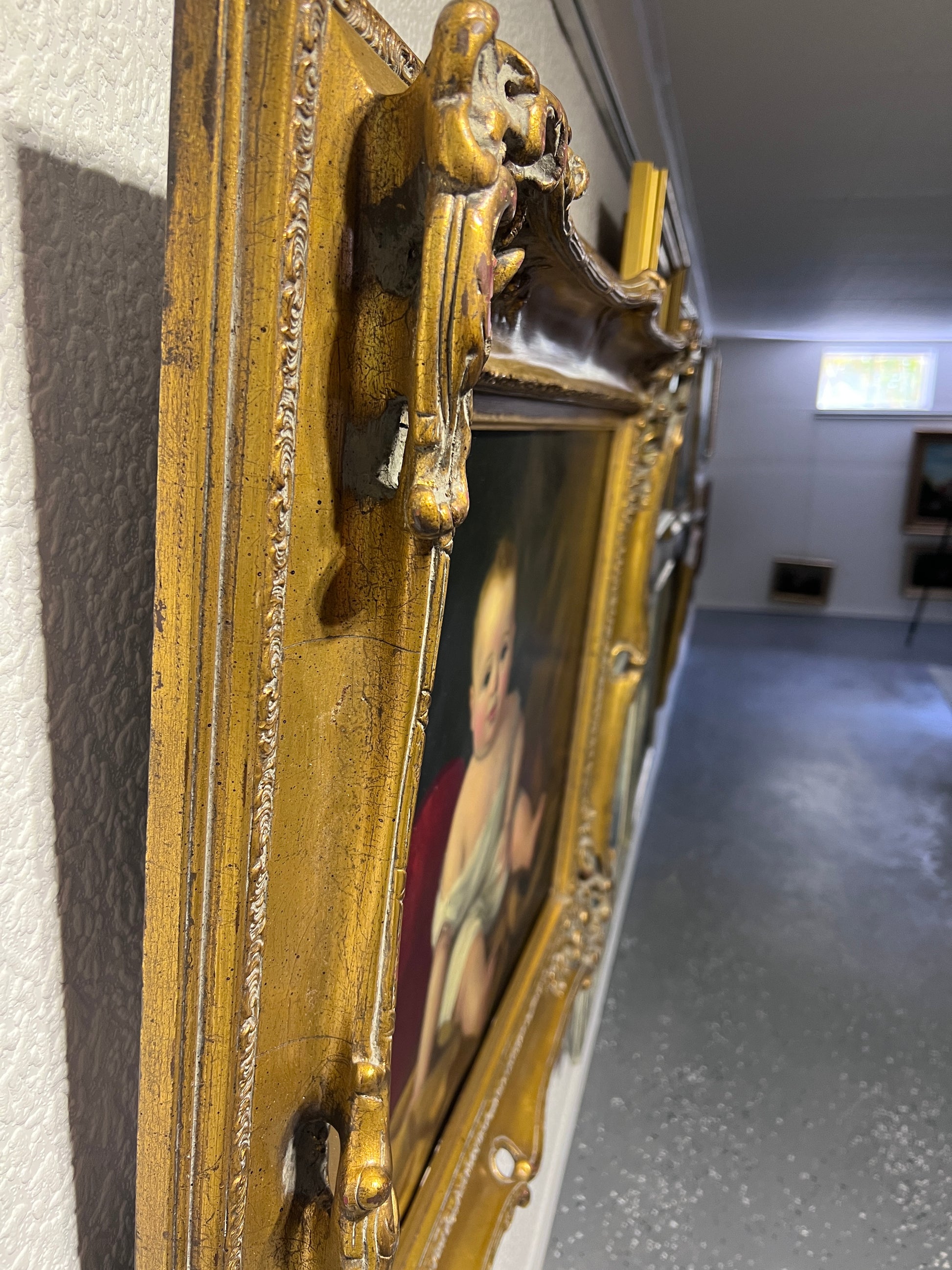
The painting is presented in an ornate gilt frame that complements its period character. Ready to hang.

📏 Measurements: Framed 41 x 34.5 inches; Painting 30 x 25 inches
🎨 Artist: Attributed to John O’Brien Inman (1828–1896), American School
✍️ Signature: Verso inscription reading “Painted by Jno. O. Inman, Portland, Oct 18th 1864,” executed in period hand
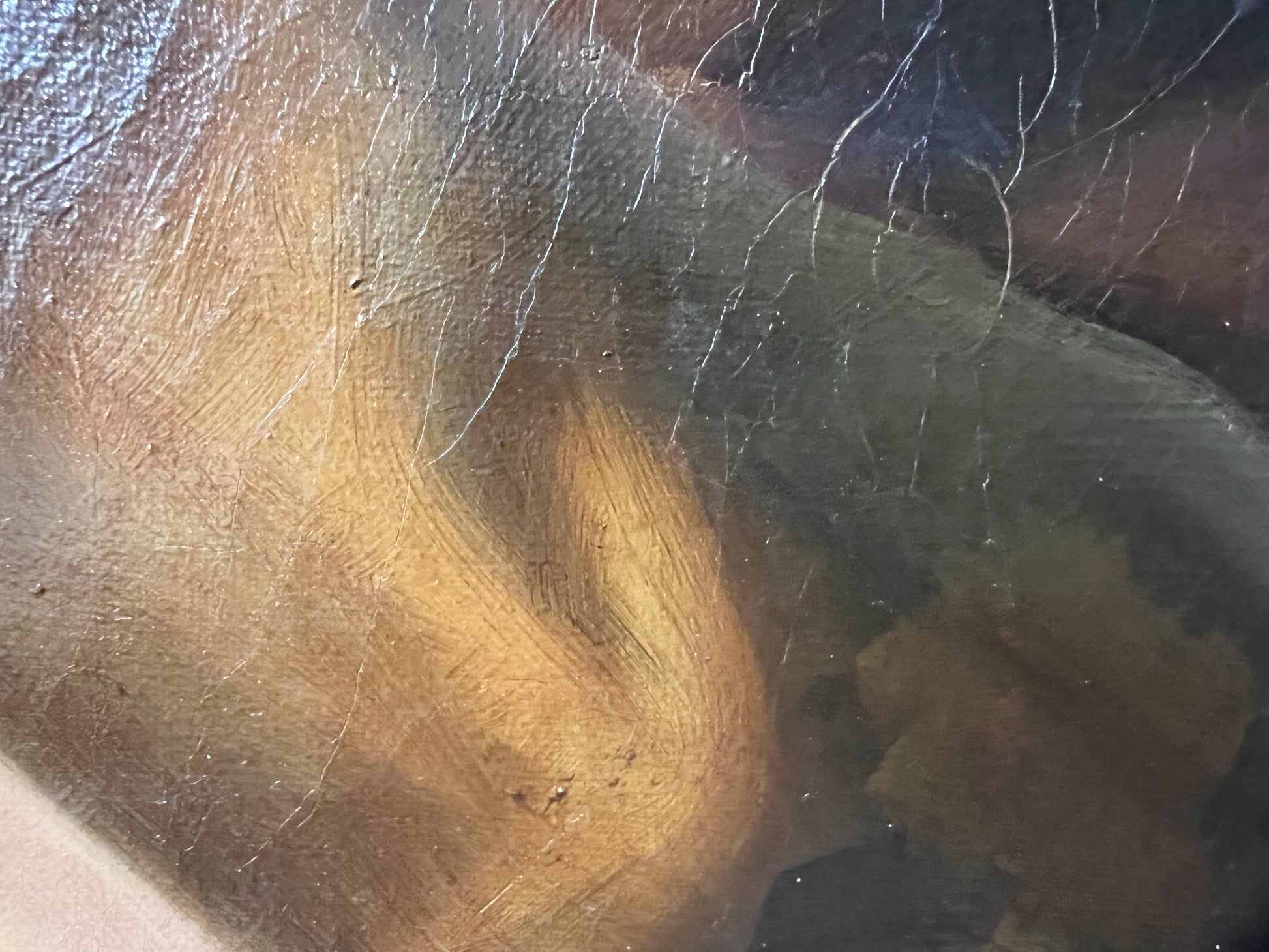
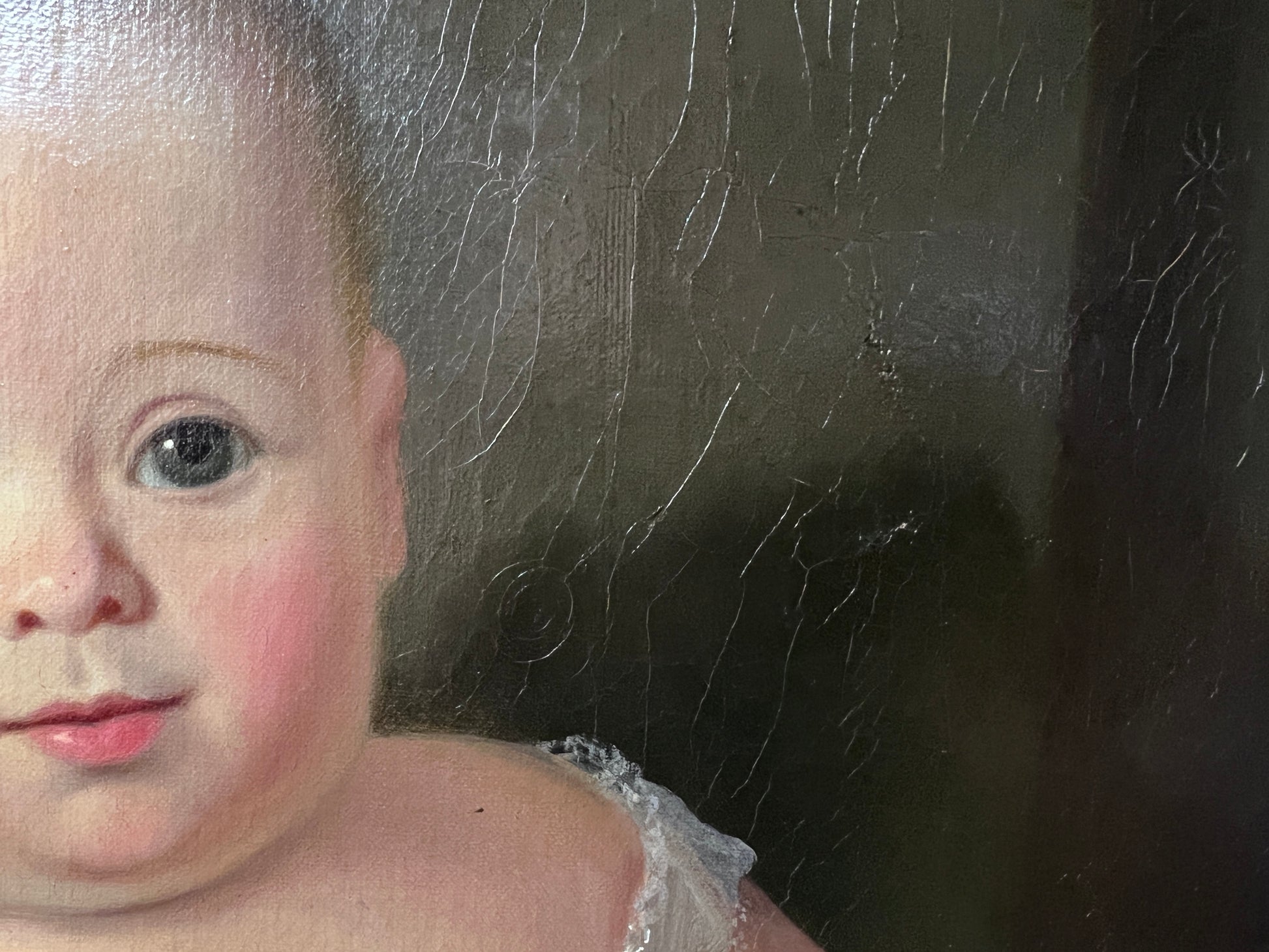
🧾 Condition: Good condition with light age-appropriate surface wear and stable craquelure consistent with age
📦 Shipping: Same day safe packaging from Florida


Please read some interesting information about Artist according to different sources:


John O'Brien Inman is one of the famous American artists who, in the last third of the 19th century, spent a good part of their career in Europe.

John O'Brien Inman (1828-1896) was born in New York City. He was the son of artist Henry Inman (1801-1846) and was one of the founders and first vice-president of the National Academy of Design in New York City. Inman studied under his father, who painted landscapes and miniatures, as well as portraits and genre scenes. After a first exhibition in 1853 at the National Academy of Design, he settled in New York in 1861: he exhibited there at the Brooklyn Artists Association and therefore seemed to specialize in still lifes, with some success apparently. he, since a newspaper reports in November 1862 that "his paintings of fruits and flowers are sold before having left the easel". He nevertheless still produced some portraits or genre scenes, almost exclusively in small formats, and ended up becoming a member of the National Academy of Design in 1865. His studio was then located at 650 Broadway.

 The following year, he moved to Europe and opened a studio in Rome. He remained abroad until 1878 when he returned for a while to New York. While in Europe, he executed a number of sentimental genre scenes in local settings. Inman's work is admired for its technical skill and, in the case of his later works, for its reflection of European influences.
 
In 1866, Inman left for Europe, where he stayed for 12 years and achieved notable success. He divides his time between London, and especially Rome and Paris, where he has two workshops. The Oxford Dictionary of American Art and Artists tells us that the artist made very detailed "historical costumes" at this time. From this European episode, Inman also leaves us some landscapes, for example, a view of Perugia in 1869, the interiors of the Basilica of Saint Francis in Assisi, and a view of Lake Lucerne in Switzerland.

Upon his return to the United States in 1878, Inman produced his most famous painting, a rather exceptionally large format (0.75 x 1.25 m) for, a scene of moonlit ice skating in Central Park in New York. He will then return for some time to England, before returning to settle on the banks of the Hudson River, then to die in great poverty in a sort of hospice.

Museums: 
National Gallery of Art of Washington, 
Smithsonian Museum of Washington, 
Metropolitan Museum, 
Museum of the City of New-York, 
Princeton University Art Museum, 
Brooklyn Museum, 
University of Indiana (Eskenazi Museum of Art)
__________________________

Please Note

This is an original antique oil painting dated 1864, not a reproduction. The attribution is based on stylistic analysis and the period-consistent inscription on the reverse. Minor wear consistent with age is present and contributes to its historical authenticity.
 

View full details